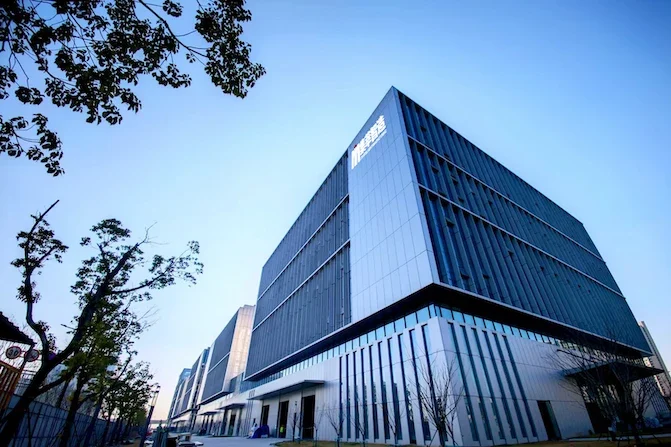
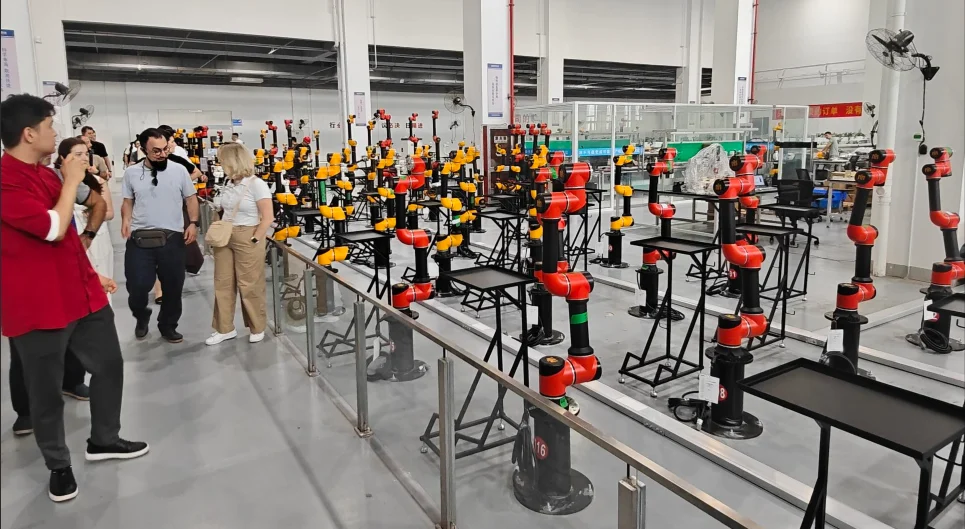
The first thing an overseas visitor notices inside IIMT’s workshop in Nanjing’s Jiangbei New Area is not the noise. It is the absence of it. Rows of collaborative robotic arms stand on test benches, their joints moving through calibration routines with a smoothness that seems almost deliberate—precise, unhurried, and strangely human in rhythm. Nearby, engineers run final quality checks on welding cells and coffee-service units before they are crated for shipment. The floor is busy, but it does not feel like a factory floor in the conventional sense.
This is Jiangsu JITRI Intelligent Manufacturing Technology Research Institute Co., Ltd.—IIMT—a company that most international buyers outside the robotics trade would not recognize by name, yet whose products are already at work in more than 40 countries and regions. Founded in 2016 by a core team of intelligent-manufacturing engineers, the Jiangsu Provincial Research Institute, and the Jiangbei New Area government, IIMT has spent less than a decade turning laboratory-grade robotics into deployable, export-ready systems. For a visiting overseas customer, the workshop visit is not simply a product demonstration. It is an introduction to a philosophy: that the next phase of industrial automation will be defined not by bigger and faster machines, but by machines that are easier to live with, easier to deploy, and easier to trust.
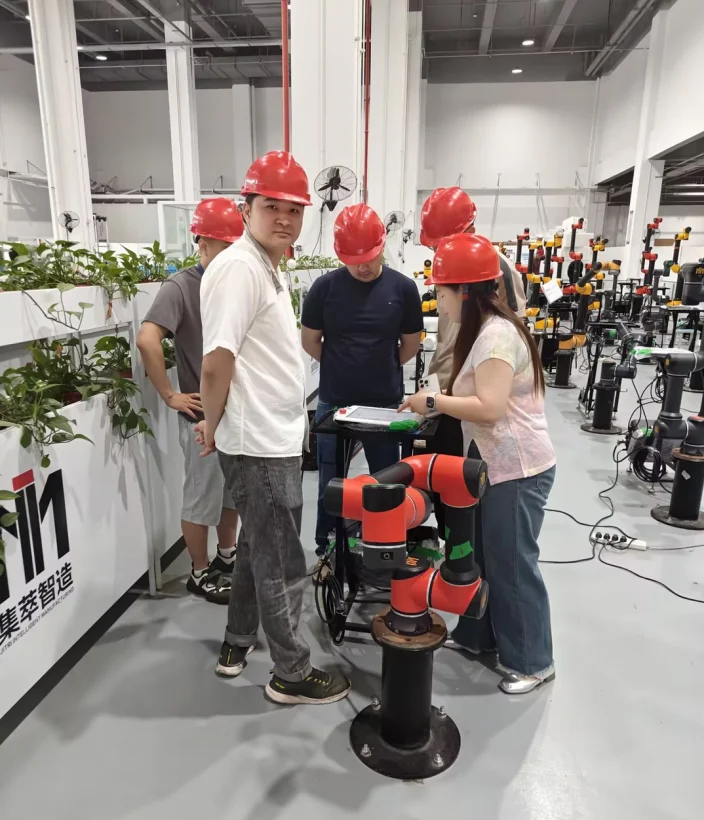
The tour begins with the collaborative robotic arm—the CI series, the physical and technological foundation on which most of IIMT’s product lines rest. A visitor from a European system-integration firm watches as a six-axis unit lifts a 5-kilogram payload through a sequence of arcs and pauses, then repeats the motion a hundred times. The repeat positioning accuracy is ±0.02 millimeters—roughly one-quarter the diameter of a human hair—and the absolute positioning accuracy is 0.1 millimeters. These are not laboratory figures extracted under ideal conditions; they are the specifications the company publishes for units that leave the Nanjing floor.
But what distinguishes the CI series is not a single number. It is the range of configurations built around a common architecture. The line covers payloads from 3 kilograms to 20 kilograms and working radii from 0.6 meters to 2 meters, spanning more than fifteen model variants. A small electronics assembler can specify a 3-kilogram unit with a short reach; a metal fabricator can choose a 16- or 20-kilogram model with an extended arm. The control software, the joint design, and the safety architecture remain consistent. For a distributor or an end-user building a mixed production line, this commonality is not a minor convenience. It reduces spare-parts inventory, simplifies operator training, and makes it possible to scale automation incrementally rather than through a single, high-risk capital commitment.
The visitor asks about safety—the question every European and North American buyer asks first. The answer is embedded in the design: the arm can detect a minimum collision force of 30 newtons, and its joint range and speed profiles allow it to operate alongside human workers without the heavy guarding that surrounds traditional industrial robots. In a continent where labor law and workplace-safety regulation shape every automation decision, this is not a technical footnote. It is the entry ticket.
Welding Without the Teach Pendant
The second stop changes the character of the visit. Welding is an industry where automation has historically meant complexity: dedicated cells, fixed fixtures, skilled programmers, and long changeover times. IIMT’s answer is a portable welding robot built on the collaborative-arm platform, combined with a self-developed welding process package. The visitor watches as an operator with no welding-programming background positions the arm, selects a weld type on a touchscreen, and initiates a seam. The robot identifies the joint geometry, generates a trajectory, and completes the weld.
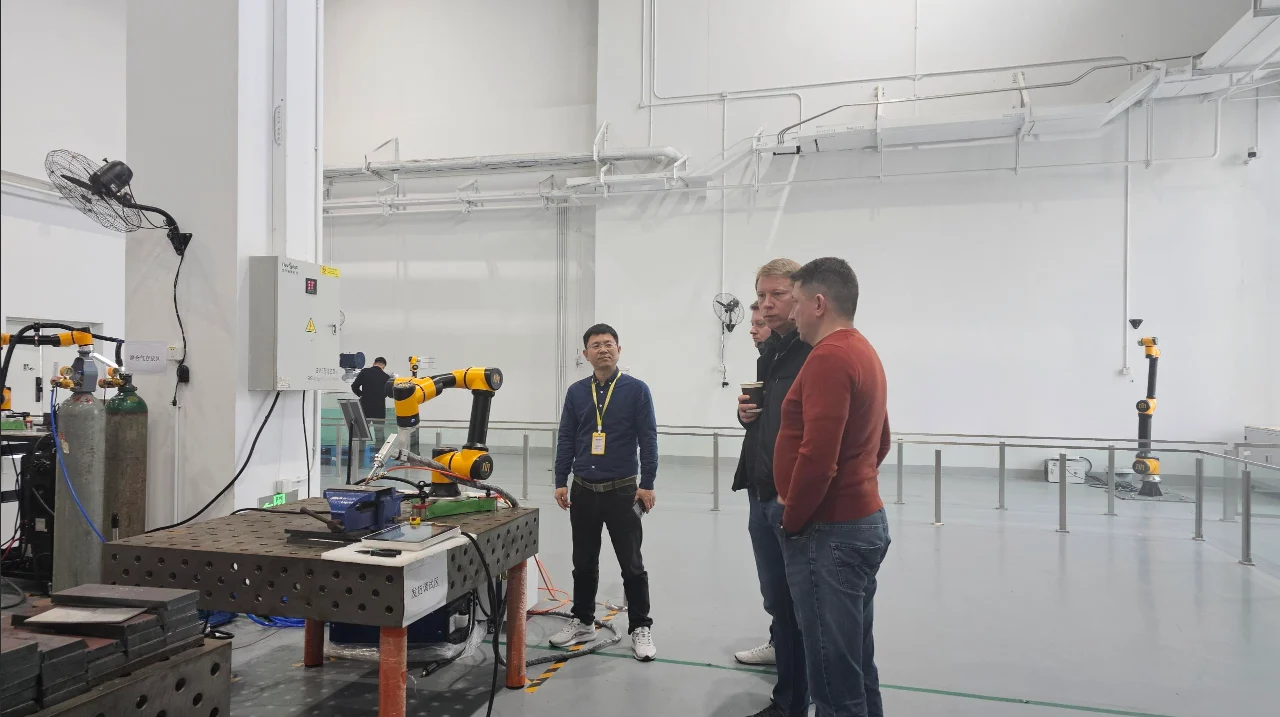
The technical machinery behind this apparent simplicity is the “teaching-free” welding system—a combination of AI vision perception, intelligent path planning, and a welding-process database that maps seam topologies to parameter sets. The company reports that programming efficiency improves by more than 90 percent compared with conventional teach-pendant methods, and that a complete novice can become a competent operator in under an hour. For a fabrication shop in Brazil, Poland, or Southeast Asia facing a chronic shortage of certified welders, this is a different kind of value proposition. It does not replace the welder’s judgment; it removes the programming barrier that has kept small and medium-sized fabricators out of robotic welding entirely
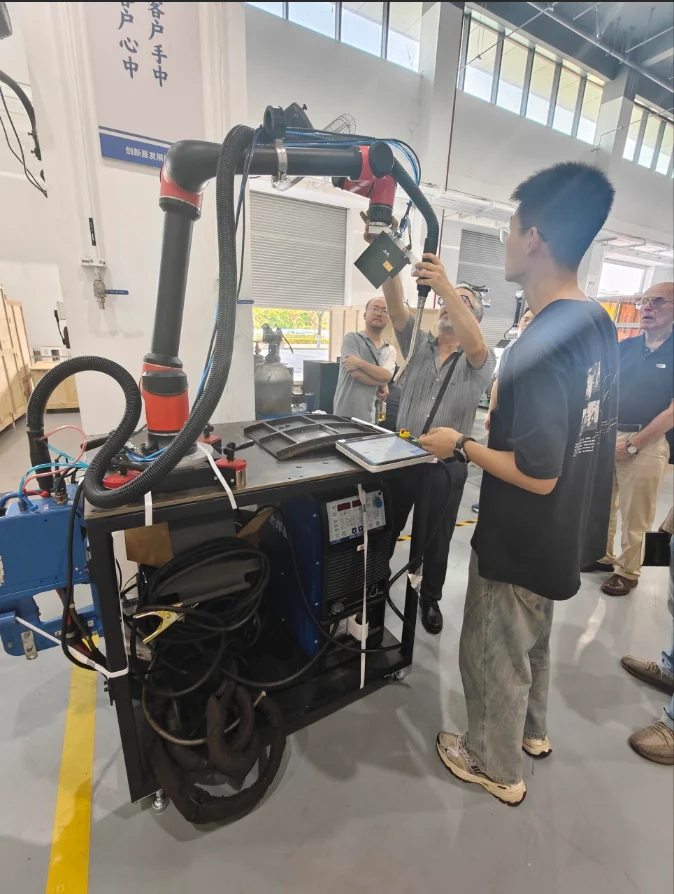
The portability matters as much as the intelligence. Traditional welding automation assumes a fixed production line and a stable product mix. IIMT’s portable welding robot is designed to move between workstations, to be deployed on job-shop floors where the workpiece changes every few hours, and to be commissioned without a dedicated automation engineer. For a contract manufacturer in Russia or a shipyard in Southeast Asia, this flexibility is not a luxury. It is the condition under which automation becomes economically rational at all.
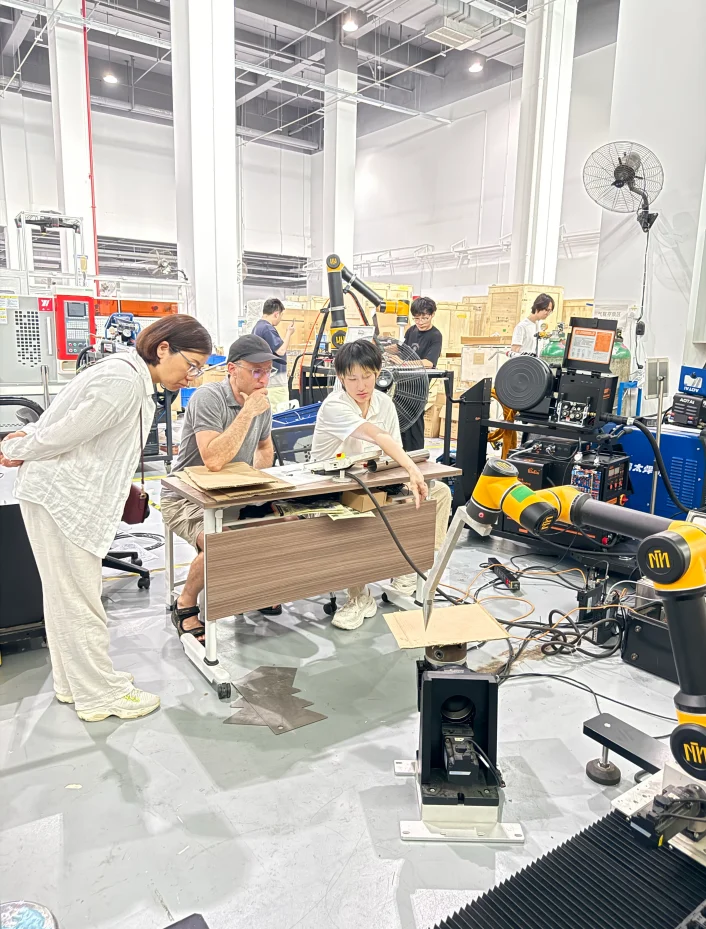
The welding line has since expanded into a broader family of industrial products: the CW5 welding robot with a 5-kilogram payload and 1,400-millimeter reach, released in early 2026 and aimed squarely at small- and medium-load welding scenarios; laser weld-seam tracking that compensates for workpiece deviation in real time; and customized systems for agricultural machinery, steel structures, and automotive components. A visitor from a European agricultural-equipment manufacturer nods at the mention of agricultural machinery—not because the technology is exotic, but because the application is immediately recognizable. This is the pattern that repeats throughout the visit: IIMT’s products are not built for showcase factories. They are built for the ordinary, demanding, cost-sensitive operations that make up the bulk of global manufacturing.
The Coffee Robot That Learned to Deliver
If welding demonstrates IIMT’s industrial seriousness, the coffee robot reveals something else: an instinct for product categories that do not yet exist. The unit on display is the coffee-making robot integrated with an autonomous indoor delivery vehicle. It is, as far as the company is aware, the first commercially deployed system that combines beverage preparation and last-meter delivery in a single robotic workflow.
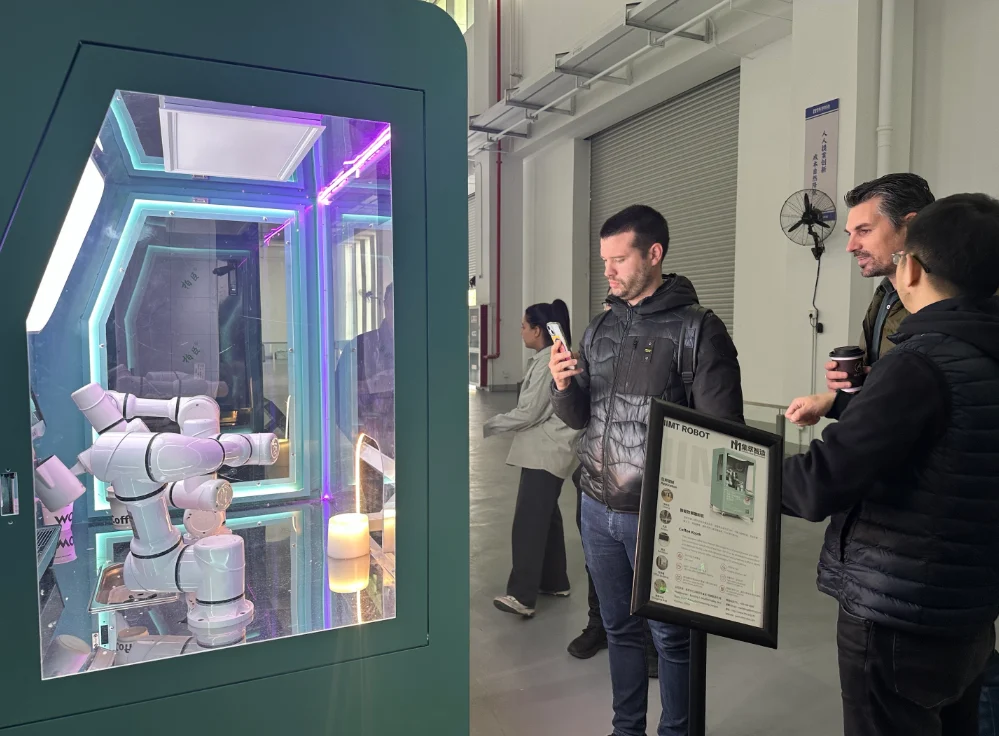
The visitor watches the sequence: a customer places an order through a mobile mini-program; the robotic arm grinds, extracts, and finishes the drink—including a latte-art pattern—in roughly 90 seconds; the finished cup is transferred to a delivery unit, which navigates autonomously through an office corridor, calls the elevator, and arrives at the designated floor. The two robotic bodies—the arm and the mobile base—coordinate through an internal communication layer, so the system behaves as a single service unit rather than two machines placed next to each other.
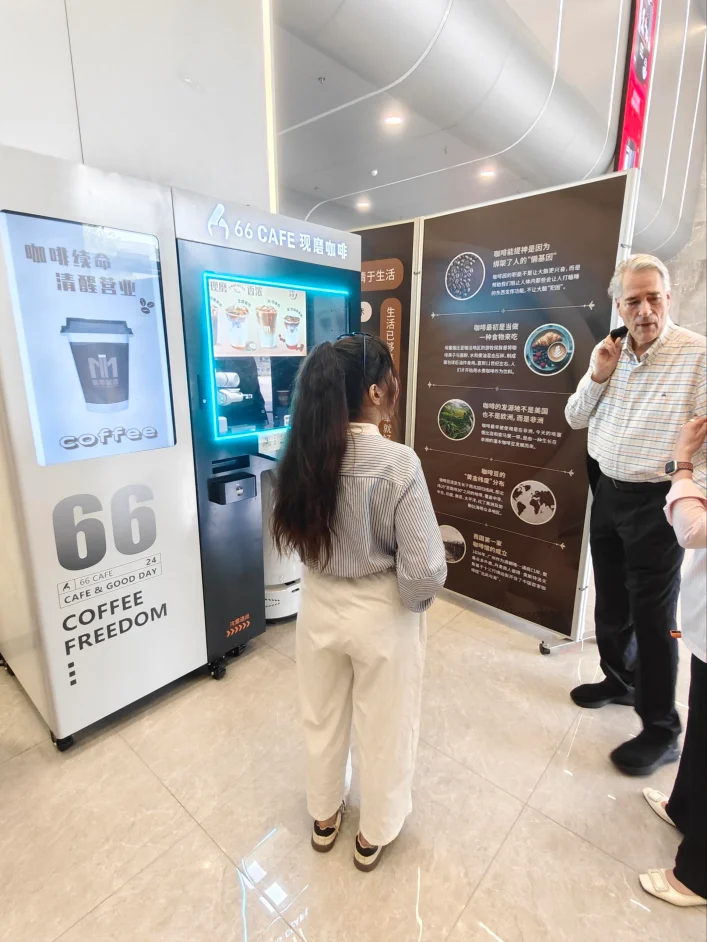
This is not a novelty product aimed at trade shows. The coffee robot has become one of IIMT’s most visible export categories, with deployments in Spain, Chile, Argentina, Bolivia, Singapore, and across Southeast Asia. A U.S. coffee-shop operator has commissioned a custom configuration. The company has reported nearly 3,000 units in production at various stages, and the product has been adapted for office buildings, airports, and tech parks—environments where the combination of preparation and delivery eliminates the labor cost of the “last fifty meters” that conventional vending machines cannot address.
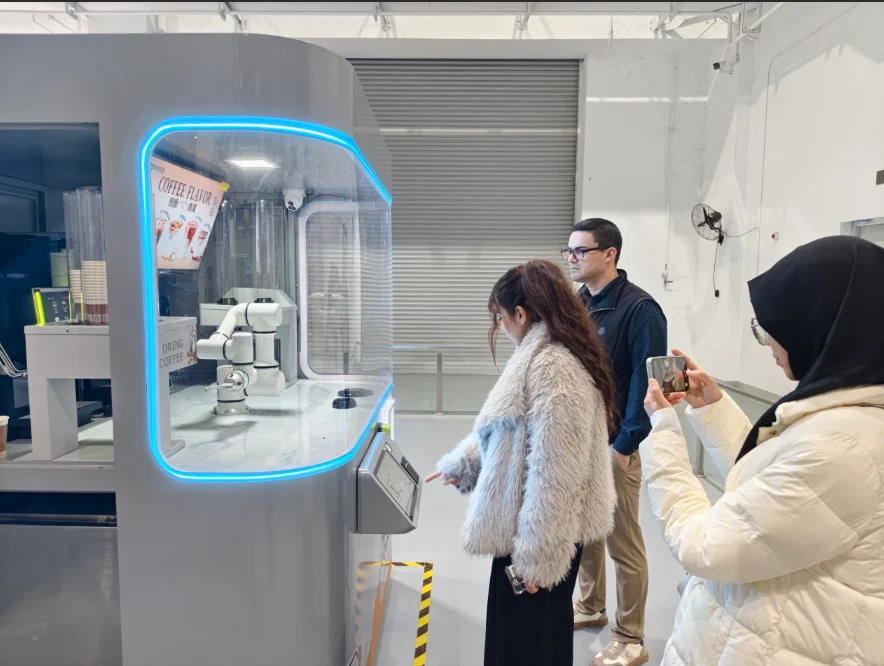
For the overseas visitor, the coffee robot is also a lesson in localization. The same hardware platform supports different beverage menus, different cup sizes, and different payment and ordering interfaces. The robot’s software is available in thirteen language versions, and the company’s overseas service centers in Spain, Poland, and other markets provide local-language support. The product is not simply exported; it is adapted. A coffee robot in Madrid is configured for Spanish-language interaction and local coffee preferences. A unit in Singapore is configured for the ordering habits of a Southeast Asian office workforce. This is a small detail with large implications: the globalization of service robotics depends less on the machine than on the hundred small interface decisions that make the machine feel local.
The Cleaner That Takes the Stairs
The fourth stop is the cleaning robot—or more precisely, the indoor cleaning unmanned vehicle. The visitor watches it navigate a test area configured to mimic a commercial building: it avoids obstacles, adjusts its cleaning mode based on floor condition, transitions between sweeping, vacuuming, and scrubbing through a modular payload interface, and—most importantly—calls and rides an elevator to move between floors. The ability to operate across floors without human intervention is not a trivial feature. In a multi-story office building, a cleaning robot that cannot take the elevator is a cleaning robot that requires a human attendant to move it between floors, which defeats much of the labor-saving rationale.
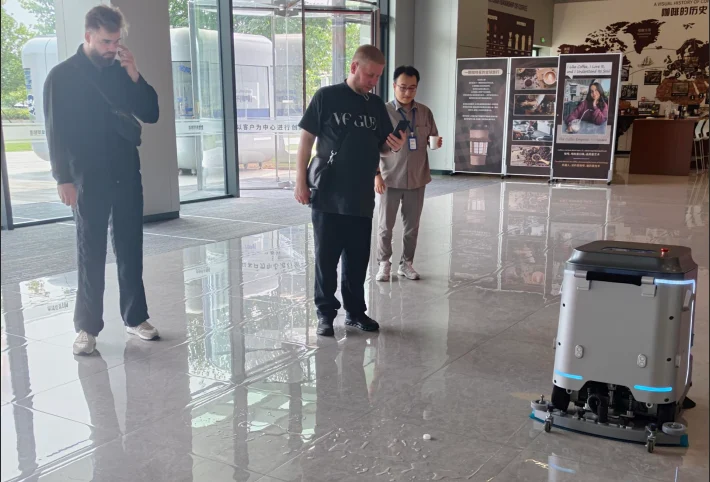
The cleaning line has already entered overseas markets. A unit deployed in a boutique office building in Paris has been described in Chinese trade press as handling common-area cleaning autonomously, including elevator transitions and cross-floor routing. The company reported 800 units in outstanding orders for the cleaning vehicle, with 400 planned for delivery in a single quarter and multiple batches destined for overseas customers. The product’s navigation and mapping capabilities—particularly its edge-cleaning performance and real-time response in dynamic environments—have been cited by overseas property-management companies as decisive factors in procurement decisions.
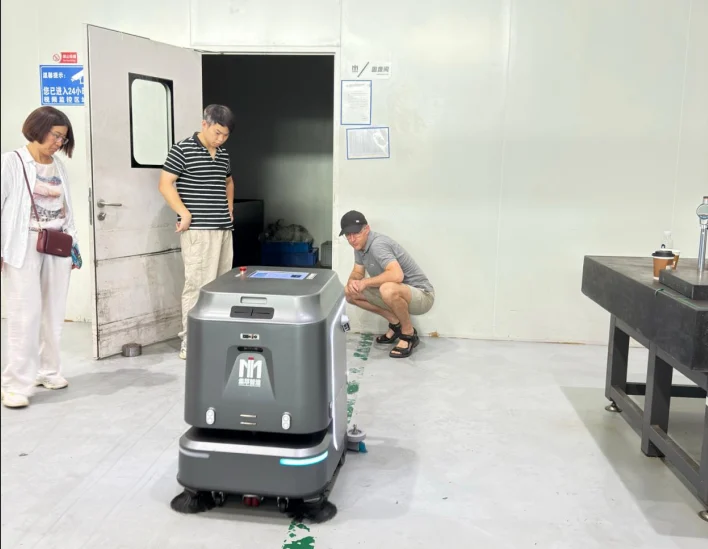
The deeper significance of the cleaning robot lies in what it reveals about IIMT’s engineering priorities. The company’s core competence is not a single robot type. It is the integration of collaborative-arm technology, mobile-vehicle autonomy, and embodied-intelligence algorithms into products that address specific, unglamorous, labor-intensive tasks. The cleaning vehicle uses the same autonomous-navigation stack developed for the indoor delivery units; the coffee robot uses the same arm platform as the welding and assembly products. The product lines are diverse, but the technological foundation is shared. This is what allows a company of roughly 120 engineers to support seven collaborative-robot models, nine indoor unmanned-vehicle models, and a growing family of composite systems.
From Forty Countries to a Hundred
The workshop visit ends not with a single product, but with a map. On the wall of the meeting room, a world map marks the countries and regions where IIMT systems are installed: Spain, Poland, the Czech Republic, Hungary, Russia, Germany, Brazil, Chile, Argentina, Bolivia, Singapore, Thailand, Vietnam, Australia, Canada, the United States, and dozens more. The company’s own communications have cited figures ranging from 34 countries in its earlier export phase to 38 countries in 2025 and more than 40 countries by 2026. The progression is itself the story: the geography of deployment has expanded faster than any single product line.
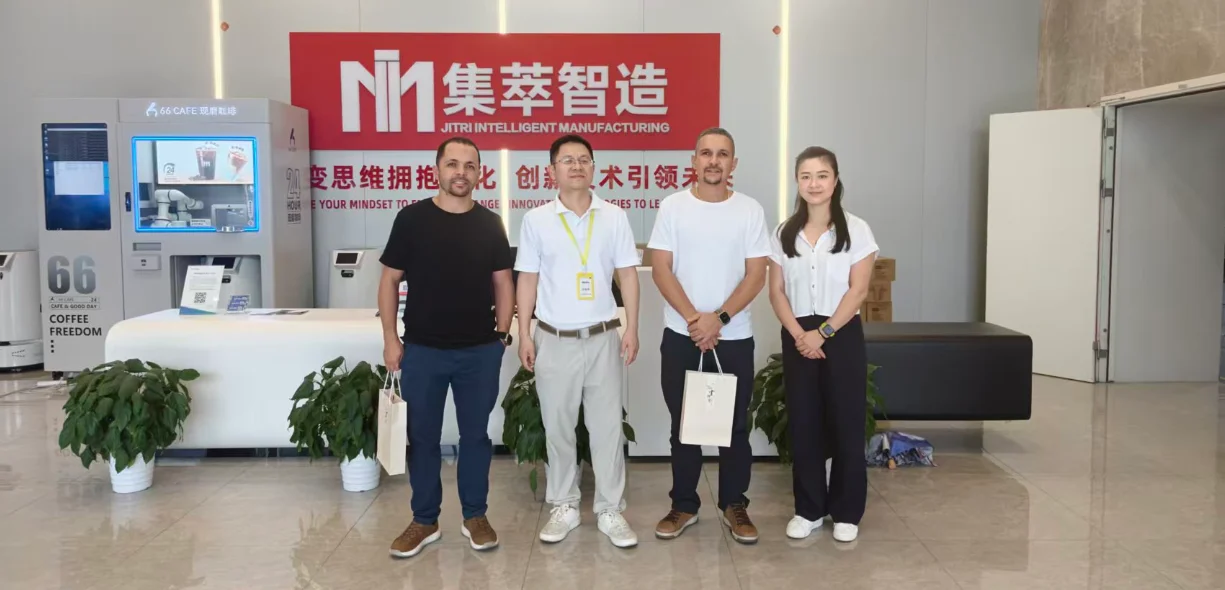
The numbers behind the map are equally telling. Overseas sales in 2025 grew four- to five-fold compared with 2024, and the company has set a target of selling more than 4,500 robots with revenue of 150 million yuan for the year. A new production base is under construction, expected to raise annual capacity to nearly 10,000 units, cut delivery cycles to 30 days, and improve production efficiency by 50 percent. The stated goal for 2026 is to reach 100 countries and regions and to build partnerships with 100 universities—an ambition that signals the company’s intention to shift from a product exporter to an ecosystem builder.
But the more interesting transformation is qualitative. IIMT has moved from a “sell the machine” model to a “sell the service” model. The company uses a combination of agents, direct sales, trade exhibitions, and ecosystem partnerships to reach overseas customers, and it has established service centers in Spain, Poland, and several other countries. The service centers are not simply repair depots. They are the mechanism through which IIMT learns what a Spanish property-management company needs from a cleaning robot, or how a Polish fabricator configures a welding cell, and feeds that knowledge back into product development. The robots ship with thirteen language versions. The service network is the physical infrastructure that makes those language versions meaningful.
For the visiting overseas customer, this is the part of the story that matters most. A robot that arrives in a crate with a manual and a helpline is a product. A robot that arrives with a local service engineer, a configured interface in the customer’s language, and a support organization that can respond within a defined time is a colleague. The difference between the two is not technological. It is organizational. And it is the difference between exporting machines and building a global business.
The Quiet Argument
The final conversation in the meeting room returns to a theme that has run through the entire visit: the relationship between automation and the people who work alongside it. IIMT’s welding robots are designed so that an experienced welder can become a robot operator without learning a programming language. The coffee robot is designed so that a café owner can deploy it without an automation engineer. The cleaning vehicle is designed so that a facility manager can redirect it to a new floor without a technician. In each case, the intelligence is embedded in the system, not delegated to the user.
This is not an argument against technical sophistication. The ±0.02-millimeter repeatability, the teaching-free welding vision system, the multi-floor autonomous navigation, and the integrated prepare-and-deliver architecture are genuine engineering achievements. But they are achievements in service of a larger goal: making advanced robotics accessible to the thousands of small and medium-sized enterprises that have been excluded from the automation economy by cost, complexity, and skills shortages.
The visitor from Europe, who has seen dozens of robot demonstrations, offers a summary that is difficult to dispute. “You are not selling robots,” he says. “You are selling the removal of a barrier.” The IIMT engineer smiles and nods. That, more than any specification sheet, is the product.
Outside the workshop, the crates are being loaded. Some are marked for São Paulo, some for Madrid, some for Singapore, some for a warehouse in suburban Toronto. Inside each crate is a machine that was designed in Nanjing, tested in Nanjing, and configured for a workplace thousands of kilometers away. The map on the meeting-room wall is not a trophy. It is a working document—a record of the places where a Chinese intelligent-manufacturing company has learned to become a local colleague, one robot at a time.