Welding Robot Automation: Why External Axes and Flexible Fixtures Matter More Than Robot Arm Specifications Alone
Many manufacturers make the same mistake when selecting welding robots: they focus exclusively on the specifications of the robot arm while overlooking the importance of external equipment and supporting systems.
After purchasing the robot, they discover that it cannot reach large workpieces, long weld seams cannot be completed continuously, internal welds remain inaccessible, and changing to a different workpiece requires extensive fixture modifications.
A welding robot is never just an isolated robotic arm.
Gantry systems solve reach limitations.
Floor-mounted linear tracks enable continuous welding of long workpieces.
Portable linear tracks extend automation to on-site operations.
Positioners eliminate inaccessible welding angles by rotating the workpiece.
Multi-axis gantry systems and flexible fixtures enable faster changeovers and flexible production.
Together, these systems form a complete external-axis ecosystem. They extend the robot's limited working envelope to cover entire workpieces and transform difficult welding positions into accessible, programmable welding paths.
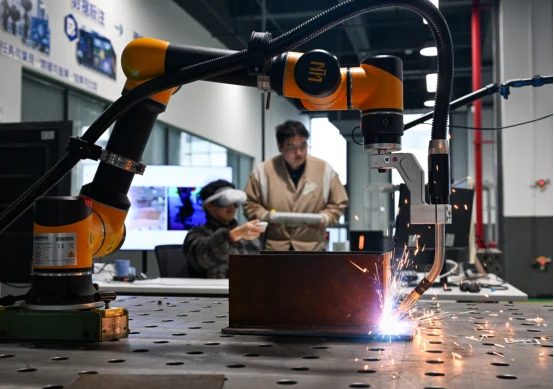
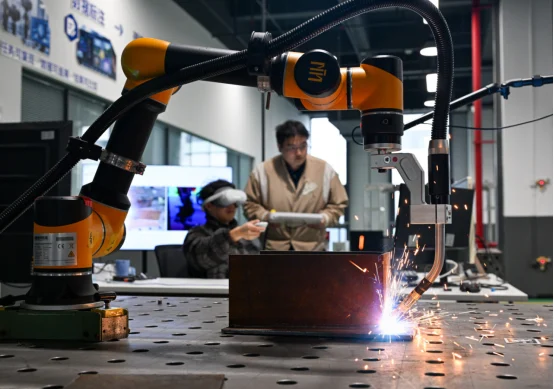
At the JITRI Embodied Intelligence Welding Training Center, all these supporting hardware systems are physically installed and operational. These are not conceptual solutions presented in PowerPoint slides. Every system can be demonstrated through real-time coordinated operation and validated through actual workpiece welding tests.
01. Gantry Systems
Expand the Working Area from a Single Point to an Entire Surface
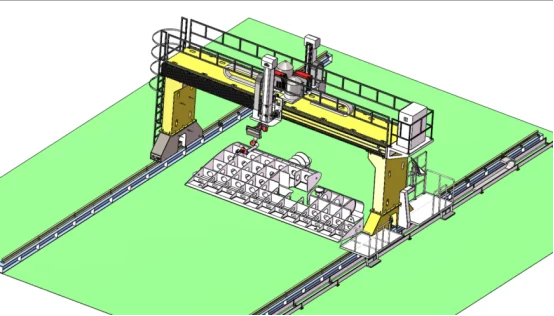
The robot can be mounted upside down or on the side of a gantry beam, combined with a vertical lifting mechanism. This configuration significantly expands the robot's working envelope beyond the limitations of a standalone robotic arm.
The gantry beam span ranges from 3 to 12 meters, with X-axis travel expandable to a maximum of 30 meters, making it suitable for welding large-scale industrial structures.
1. Problems Solved
For large steel structures, shipbuilding sections, tower components, and truss structures, a single robot arm often lacks sufficient reach.
Manufacturers may have to repeatedly reposition workpieces and recalibrate the robot. Manual welding also introduces inconsistencies in weld quality.
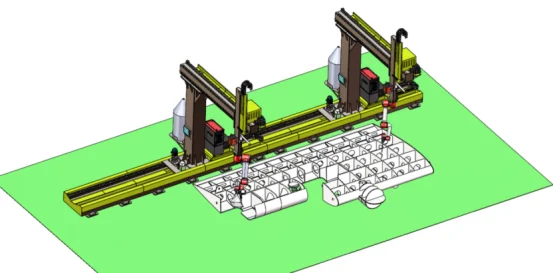
A gantry system positions the robot above the workpiece, allowing a single robotic system to cover continuous weld seams across upper and vertical surfaces. It reduces repeated repositioning and supports multiple installation configurations, including upright, side-mounted, and inverted mounting.
The training center has a multi-axis gantry system that demonstrates coordinated interpolation between the robot and gantry axes. Combined with 3D vision-based teachless programming and laser seam tracking, it can perform real welding process validation on large workpieces.
2. Typical Applications
Shipbuilding section frames
Large radar structural components
02. Floor-Mounted Linear Tracks
Turn Long Weld Seams into Continuous, Uninterrupted Production
Box beams, H-beams, large I-beams, long boom structures, and oil pipelines are common applications in the steel fabrication industry.
1. Problems Solved
Manual welding of long seams requires prolonged physical effort. Welding parameters may drift over time, resulting in inconsistent weld profiles along the seam. Shift changes can also introduce weld defects at restart points.
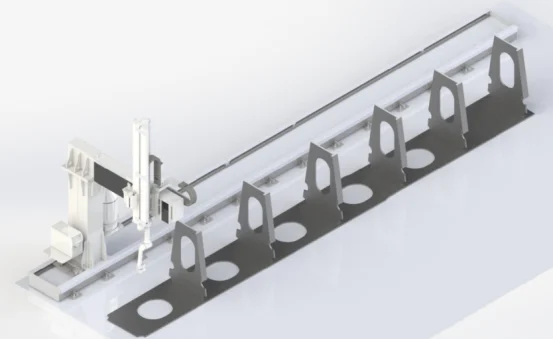
A floor-mounted linear track serves as the robot's seventh axis, with an effective travel distance of up to 30 meters.
The robot moves synchronously along the length of the workpiece, enabling continuous welding of long seams without unnecessary interruptions. Standardized welding procedure packages ensure consistent parameter settings and improved weld quality.
The track can also be configured into multiple sections to support parallel operations across different workstations, increasing overall production throughput.
At the JITRI training center, the linear track workstation can operate in coordination with headstock-tailstock positioners and 3D laser scanning systems, demonstrating the complete workflow:
3D Scanning → Workpiece Modeling → Welding Path Planning → Automatic Welding
2. Typical Applications
H-beams in structural steel fabrication plants
Long boom structures for construction machinery
Box columns
03. Portable Linear Tracks and Mobile Welding Solutions
Bringing Robotic Welding Directly to the Job Site
Not all welding operations take place in standardized factory workstations.
For on-site maintenance, ship compartments, gate slots, pipeline maintenance platforms, and other confined or non-standard environments, large fixed robotic workstations are often impossible to install.
Building a dedicated fixed workstation for small-batch, non-standard workpieces can also involve excessive investment.
Portable linear track solutions are designed around modular construction, foundation-free installation, and easy assembly and disassembly.
Magnetic bases can be directly attached to steel structures, supporting upright, side-mounted, and inverted installation configurations.
Inverted guide rails can also extend into confined internal spaces, allowing robots to perform welding operations in areas that are difficult for conventional equipment to access.
Typical Applications
On-site repair welding in steel fabrication plants
Mining equipment maintenance
Emergency repair welding of non-standard and irregular components
04. Dual-Station Welding Positioners
Rotate the Workpiece Instead of Forcing the Robot into Difficult Welding Positions
Some weld seams are located on internal surfaces or the back of a workpiece. No matter how flexible a robot arm is, certain areas remain difficult or impossible to reach.
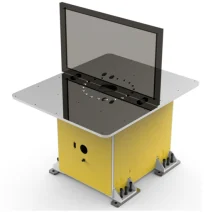
Instead of forcing the robot into awkward or singular configurations, it is often more effective to rotate the workpiece.
A welding positioner uses a rotary mechanism to turn and tilt the workpiece, allowing the robot to maintain more favorable welding positions, such as flat and horizontal-vertical welding positions.
By minimizing difficult overhead welding operations, the system helps improve weld consistency and overall quality.
A headstock-tailstock dual-positioner configuration enables alternating loading and unloading:
While the robot welds on one station, operators can load or unload workpieces on the other. This reduces workstation idle time and helps maintain continuous production.
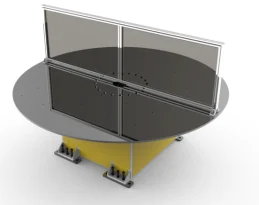
The rotation mechanism can also synchronize and interpolate with the robot's welding trajectory. Repeat positioning accuracy can reach ±0.1 mm, reducing positioning errors associated with secondary clamping.
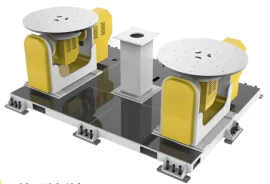
At the JITRI training center, positioners can operate in coordination with multi-axis gantry systems and flexible fixture platforms. Welding parameters can be dynamically matched according to weld type and penetration requirements.
Typical Applications
Automotive subframes
Box-shaped structural components
Sealed welding seams on power transformer oil tanks
Multi-sided welding of shipbuilding sections
05. Multi-Axis Gantry Systems and Flexible Fixtures
Fast Changeovers for High-Mix, Low-Volume Production
1. Problems Solved
Many manufacturers still rely on dedicated fixtures designed for individual products.
One fixture may only be suitable for one specific workpiece. When a new product is introduced, production lines must be stopped for fixture modifications or replacement.
Welding quality also depends heavily on the experience and skills of individual welders.
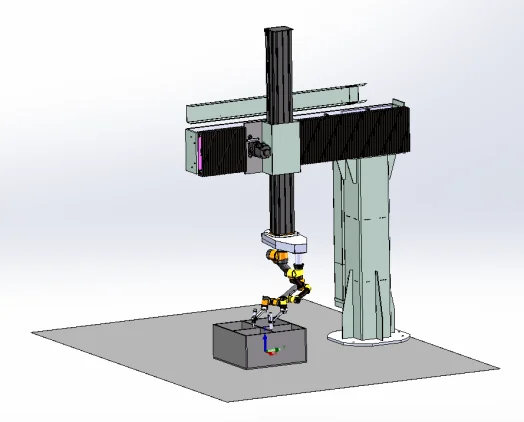
Multi-axis gantry systems with flexible fixtures provide expandable X, Y, and Z-axis configurations. Combined with welding positioners, modular fixture components can be quickly replaced, enabling flexible production line reconfiguration.
Integrated with 3D teachless vision systems, the solution can automatically identify weld seam positions, gaps, and directions.
An intelligent welding process database can automatically recommend welding parameters based on material thickness, wire specifications, and weld types.
Changeover and commissioning time can be reduced to within 15 minutes, helping manufacturers reduce dependence on individual operator experience and support mixed-model production.
2. Typical Applications
Mixed-model production of structural steel components
Pressure vessels
Energy equipment manufacturing
A Complete Welding Automation System Is Built Like a Modular Toolkit
A truly advanced welding automation system is not simply about purchasing a robot with the highest specifications.
It is about building an integrated, modular capability platform consisting of:
Welding robot
External axes
Vision and sensing systems
Intelligent welding process database
Flexible fixtures and positioning systems
Manufacturers can select and combine different modules according to workpiece dimensions, welding positions, production volumes, and actual factory requirements.
The goal is to build a welding automation solution that genuinely matches the production environment rather than simply investing in a high-performance robot arm.
Experience Real Welding Automation at JITRI
The JITRI Embodied Intelligence Welding Training Center features 20 practical training workstations, with complete external-axis equipment, supporting hardware, and integrated automation systems physically installed.
Visitors can experience real equipment coordination, intelligent welding processes, 3D vision-based applications, flexible fixture configurations, and actual workpiece welding validation.
From a single robotic arm to a complete intelligent welding ecosystem, JITRI helps manufacturers turn complex welding challenges into practical, flexible, and scalable automation solutions.