01. Shipbuilding Industry
Tackling Complex Components and Overcoming Multi-Position Welding Challenges
Shipbuilding is a typical low-volume, high-mix manufacturing industry characterized by highly customized structural components.
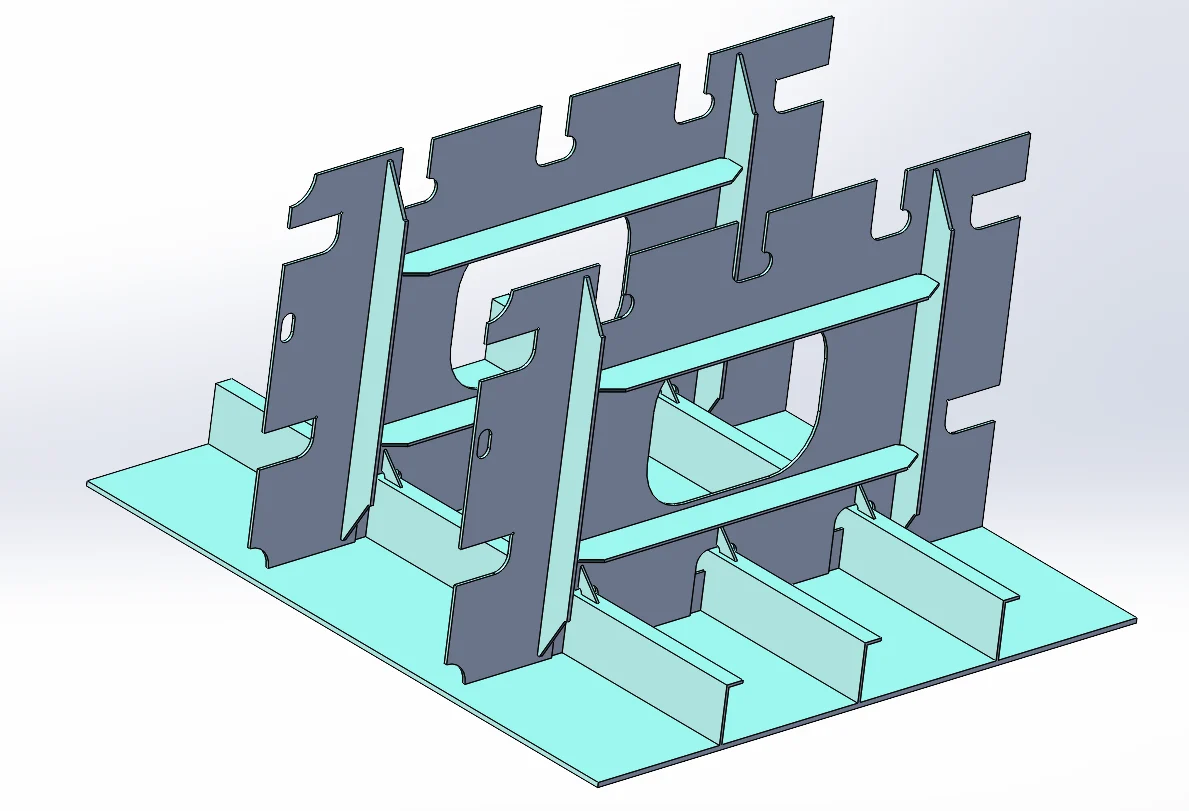
Local hull panel frameworks within shipbuilding sections are representative examples of the complex welding structures commonly encountered in ship construction.
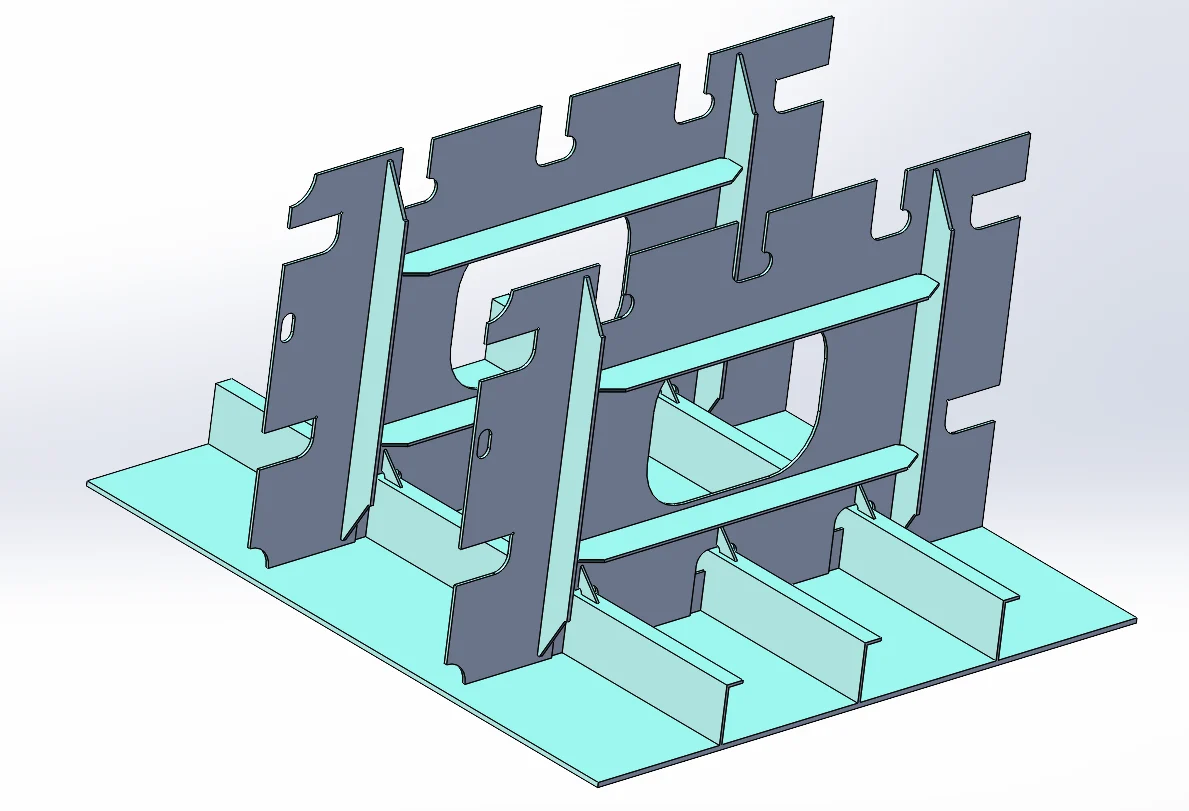
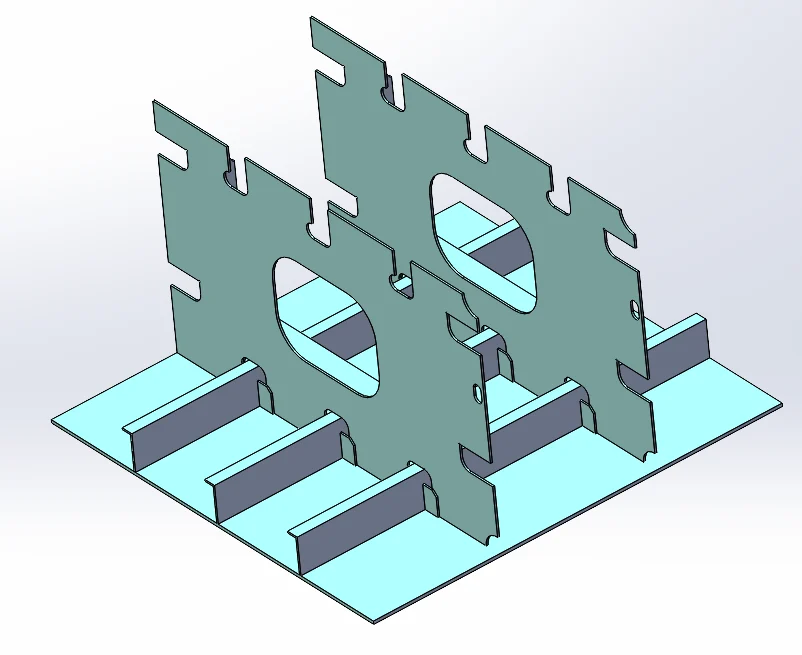
Figure: A typical local hull panel framework used in shipbuilding.
These frameworks feature intricate internal structures with numerous intersecting stiffeners and reinforcement plates. Common configurations include single-plate single-stiffener structures, single-plate multi-stiffener structures, irregular reinforcement plates, cable openings, and triangular stiffeners.
1. Key Welding Challenges in the Industry
Harsh Working Environments
Working spaces inside ship compartments are often narrow, enclosed, and poorly illuminated, significantly restricting manual welding operations.
Welding fumes are difficult to disperse in confined spaces. Welders working inside these compartments are exposed to potential hazards such as burns and harmful fume inhalation. These challenging conditions also make recruitment and employee retention increasingly difficult.
Complex Welding Positions and Geometries
Shipbuilding components frequently involve multiple welding positions, including horizontal, vertical, and overhead welding.
Numerous short weld seams are distributed throughout the internal structure. Fillet welds at intersecting stiffeners and complex corner joints present particularly demanding process requirements.
The densely arranged stiffeners also create numerous potential robot collision points. Inadequate motion planning can easily result in interference between the robotic arm and surrounding structures.
High Requirements for Robotic Intelligence
Visual recognition in dark and complex environments can be significantly affected by reflective surfaces and welding fumes.
The variety of irregular component geometries also makes reverse engineering and 3D modeling particularly challenging.
Furthermore, weld seams vary considerably in length, position, and orientation. Each welding task requires appropriate process parameters, including welding current, voltage, and travel speed.
Traditional teaching-based robots cannot efficiently handle such highly variable components without extensive manual programming and adjustment.
In the past, many of these complex weld seams had to be completed manually by highly experienced welders working inside confined compartments. This approach not only limited production efficiency but also introduced quality risks associated with human factors, including inconsistent weld formation, missed welds, and lack of fusion.
2. Intelligent Welding Solution
Jitri Intelligent Manufacturing's welding robots utilize full-scene 3D scanning and reverse engineering technology to reconstruct the entire hull panel framework in three dimensions.
The system does not require complete and highly accurate CAD drawings to be prepared in advance.
By analyzing the spatial position and orientation of the workpiece, the system intelligently calculates and generates robot motion trajectories while proactively identifying and avoiding potential collision points.
The robot can adaptively recognize different weld geometries and automatically select the corresponding welding process parameters.
This enables integrated welding operations across horizontal, vertical, and overhead positions, significantly reducing the need for manual intervention.
3. Practical Application Results
The integrated solution is designed to meet the welding quality requirements applicable to complex shipbuilding section frameworks, providing controlled weld penetration, consistent weld formation, and reliable quality at corner and fillet joints.
By minimizing the need for workers to enter enclosed compartments, the solution helps reduce occupational safety risks and dependence on highly skilled manual welders.
It enables the automation of complex shipbuilding component welding processes and provides a replicable practical pathway for digital transformation and intelligent manufacturing in the shipbuilding industry.
02. Power Transformer Industry
Strict Control of Welding Precision and Airtightness to Ensure Power Equipment Reliability
Power transformers are critical components of modern electrical grids. The welding quality of transformer enclosures, oil tanks, and cooling structures directly affects the operational safety and reliability of the entire unit.
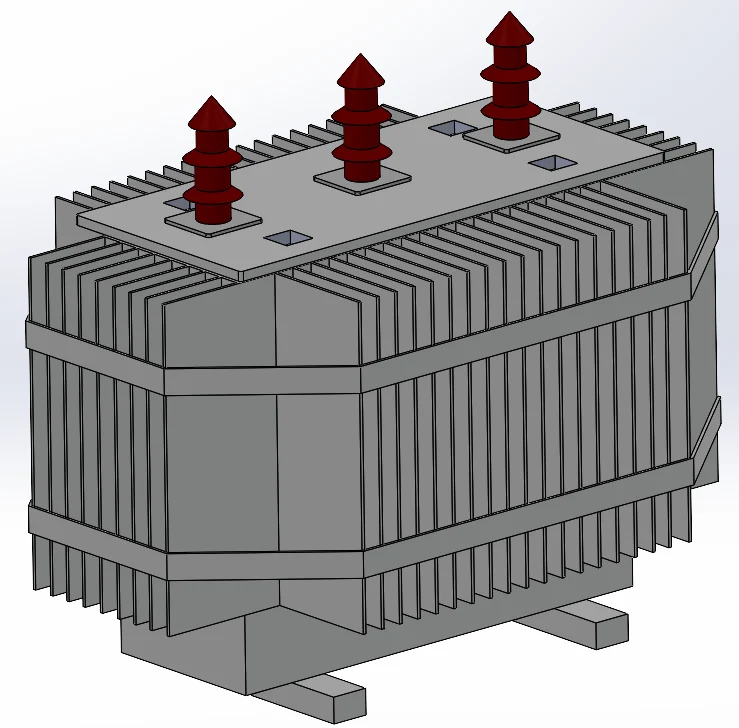
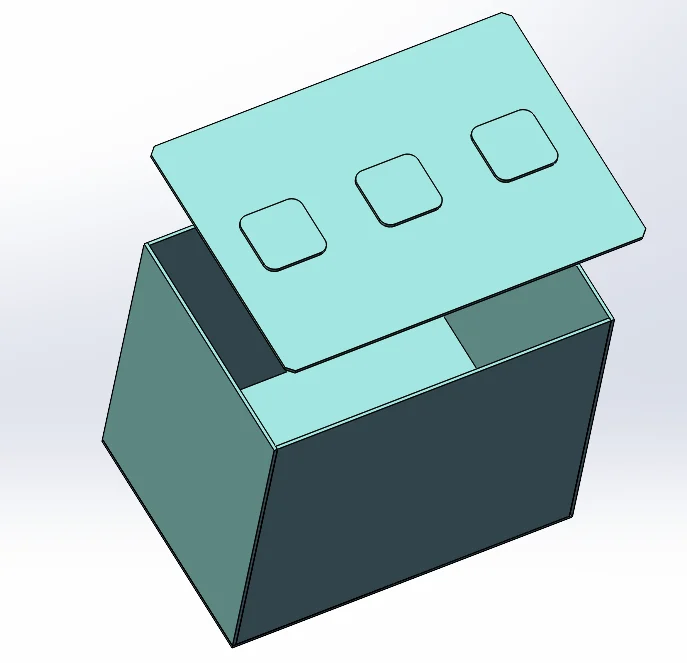
Figure: Welding of a transformer oil tank in the power equipment industry.
Defects such as porosity, slag inclusions, cracks, or incomplete fusion can cause oil leakage and compromise the sealing integrity of transformer enclosures. Such failures may lead to equipment shutdowns and significant economic losses.
Consequently, welding in this sector requires extremely strict control over airtightness, weld penetration, and thermal deformation.
1. Key Welding Challenges in the Industry
Variations in Incoming Materials and Assembly Accuracy
Transformer enclosures are typically manufactured from sheet metal components. Variations in incoming sheet metal dimensions and assembly conditions can result in misalignment and fluctuating joint gaps.
Traditional welding robots operate with predefined trajectories and often struggle to accommodate these variations.
This can lead to weld deviation, insufficient penetration, and inconsistent welding quality.
Specialized Weld Locations
Transformer enclosures contain numerous continuous sealing seams, as well as special welding positions involving corner joints, flange connections, and other complex structures.
Because sheet metal is relatively thin, controlling welding heat input is particularly challenging. Excessive heat can easily cause deformation of the enclosure.
Large Numbers of Weld Seams
Transformer enclosures typically involve a substantial number of weld seams, making manual welding highly dependent on individual operator skills.
Differences in welder experience, working shifts, and operating conditions can result in noticeable variations in weld quality.
Once leakage occurs, subsequent inspection, grinding, and repair welding can significantly increase production costs.
2. Intelligent Welding Solution
Based on the structural characteristics of transformer enclosures, Jitri Intelligent Manufacturing optimizes its 3D vision perception algorithms to improve adaptability to real-world assembly variations.
Before welding, the system scans the enclosure geometry to identify assembly gaps and positional deviations in real time.
Based on the detected information, the robot dynamically compensates for trajectory deviations to maintain accurate welding positions.
In addition, Jitri develops a dedicated welding process database for transformer manufacturing.
Specialized welding parameters are configured for different applications, including:
Long, continuous sealing welds.
Corner and fillet welds.
Flange connection welds.
Other specialized enclosure welding positions.
The system also optimizes heat input control strategies to minimize sheet metal deformation, maintain weld continuity, and help ensure the overall sealing integrity of the enclosure.
3. Practical Application Results
The solution enables automated welding of transformer enclosures and oil tank structures, delivering more uniform and consistent weld formation.
It helps reduce welding defects and minimizes subsequent grinding, repair welding, and rework requirements.
Welding quality becomes less dependent on individual operator performance, significantly improving production consistency.
At the same time, intelligent welding automation helps transformer manufacturers address the shortage of highly skilled welders and maintain stable, repeatable production.
03. Embodied Intelligent Welding Training Center
Bringing Production Challenges Forward Through Technical Simulation and Process Validation
Intelligent welding technology should not remain limited to computer simulations or ideal laboratory conditions.
In many industrial automation projects, implementation failures occur because systems are introduced directly into production lines without sufficient real-world validation.
When exposed to complex on-site conditions, unexpected technical problems can emerge, resulting in project delays, additional commissioning costs, and operational risks.
This is precisely why Jitri Intelligent Manufacturing established its Embodied Intelligent Welding Training Center.
The core purpose of the center is to reproduce the challenging operating conditions encountered in real factories within a controlled testing environment.
Here, the complete welding solution can undergo systematic technical validation.
Potential defects and operational risks—including welding deformation, porosity, and lack of fusion—can be identified and evaluated in advance.
Multiple rounds of welding process optimization and technical iteration can then be conducted before the solution is deployed at the customer's production site.
Keep the risks in the training center. Deliver validated solutions to the factory.
Customers can directly send their actual workpieces and production samples to the training center for welding process testing and feasibility evaluation.
This allows technical validation to be completed without occupying the customer's production line.
As a result, the approach helps reduce implementation risks, shorten on-site commissioning cycles, and improve the overall efficiency of automation projects.
It represents a practical development philosophy: technology should originate from real industrial needs and ultimately deliver value back to industry.
Meeting Diverse Welding Challenges Through Embodied Intelligence
The welding challenges encountered in shipbuilding and power transformer manufacturing represent only a small part of the broader heavy manufacturing industry.
Different industries and workpiece configurations present unique welding requirements. There is no single automation solution capable of meeting every manufacturing scenario.
The true value of embodied intelligent welding is not simply to replace human welding movements.
Instead, it is to equip robots with the ability to perceive their surroundings, understand workpiece geometries, autonomously plan motion trajectories, and adapt to changing production conditions.
Through these capabilities, robots can better accommodate the complexity and variability of real industrial environments.
Jitri Intelligent Manufacturing (IIMT) welcomes customers from shipbuilding, power and electrical equipment manufacturing, and other heavy industrial sectors to visit our Embodied Intelligent Welding Training Center.
Bring your actual production samples and workpieces to conduct welding process tests, technical evaluations, and joint validation with our engineering team.
Together, we can explore new possibilities for intelligent welding automation and develop practical solutions for complex industrial manufacturing environments.
Jitri Intelligent Manufacturing — Empowering Industrial Welding with Embodied Intelligence.