Introduction
As global manufacturing shifts toward automation, flexibility, and human–machine collaboration, collaborative robots (cobots) are becoming a key driver of industrial transformation. Among emerging technology providers, IIMT (Jiangsu JITRI Intelligent Manufacturing Technology Research Institute Co., Ltd.) stands out as a strong innovator in China’s intelligent manufacturing ecosystem.
In this article, we explore how IIMT (referred to as JITRI in English branding) develops collaborative robot solutions, how it compares with global competitors, and why it is gaining attention in industrial automation markets.
About IIMT (JITRI)
IIMT is a research-driven intelligent manufacturing company focused on robotics, automation systems, and advanced industrial solutions.
Unlike many traditional robot manufacturers, IIMT combines:
- Applied industrial research
- Robotics engineering development
- Real-world manufacturing deployment
- Integration-focused automation design
This makes JITRI not only a robot supplier, but also a technology solution provider for smart factories.
What Are IIMT Collaborative Robots?
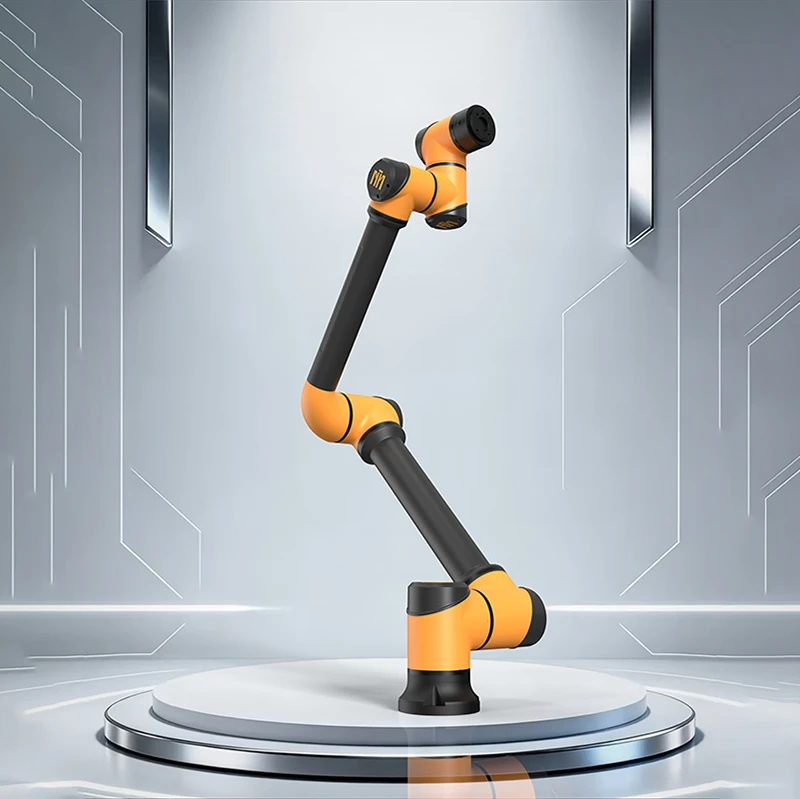
IIMT collaborative robots are designed to work safely alongside human operators without requiring traditional safety cages. These robots are widely used in:
- Welding automation
- Material handling
- Assembly operations
- Machine tending
- Flexible production lines
Key Features of IIMT Cobots
- Human-safe collaboration design
- High precision motion control
- Easy deployment and programming
- Flexible integration with factory systems
- Industrial-grade durability
These features make IIMT cobots suitable for small and medium-sized manufacturers as well as large industrial enterprises.
IIMT vs Global Competitors
To understand IIMT’s positioning, it is important to compare it with leading global collaborative robot brands:
1. Universal Robots (Denmark)
Universal Robots
- Market leader in collaborative robots
- Strong ecosystem and global integration
- Higher cost structure for many applications
2. FANUC (Japan)
FANUC
- Extremely reliable industrial robots
- Strong in high-volume manufacturing
- Less flexible in lightweight cobot customization
3. ABB Robotics (Switzerland)
ABB Robotics
- Advanced automation portfolio
- Strong AI and digital factory integration
- Premium pricing segment
Where IIMT (JITRI) Stands Out
Compared with these global players, IIMT focuses on:
- Cost-effective customization for Asian manufacturing environments
- Faster deployment cycles
- Application-specific cobot design (especially welding and industrial tasks)
- Stronger integration with local supply chains
While global brands dominate in standardization, IIMT emphasizes flexibility and application-driven engineering, making it highly competitive in fast-changing production environments.
Application Focus: Welding and Industrial Automation
One of IIMT’s strongest areas is collaborative welding robotics, where precision and consistency are critical.
Benefits include:
- Stable welding quality
- Reduced labor intensity
- Improved workplace safety
- Higher production efficiency
In many factories, IIMT cobots are used not to replace workers, but to assist them in repetitive or physically demanding tasks, improving overall productivity.
Why IIMT (JITRI) Matters in Smart Manufacturing
The rise of intelligent manufacturing is not just about replacing humans with machines—it is about creating collaboration between human expertise and robotic precision.
IIMT’s approach aligns with this philosophy by focusing on:
- Practical industrial deployment
- Operator-friendly systems
- Scalable automation solutions
- Continuous R&D innovation
This positions JITRI as an important contributor in China’s smart manufacturing transformation.
FAQ (Frequently Asked Questions)
1. What does IIMT stand for?
IIMT stands for Jiangsu JITRI Intelligent Manufacturing Technology Research Institute Co., Ltd, a robotics and automation technology company.
2. What are collaborative robots used for?
Collaborative robots are used for tasks such as welding, assembly, packaging, material handling, and machine tending while working safely alongside humans.
3. How is IIMT different from other robot brands?
IIMT focuses on application-specific solutions, faster deployment, and cost-effective customization, while many global brands focus on standardized high-end systems.
4. Are IIMT cobots suitable for small factories?
Yes. IIMT cobots are designed for flexible integration, making them suitable for both SMEs and large-scale manufacturing plants.
5. What industries use IIMT collaborative robots?
Industries include automotive, metal fabrication, machinery manufacturing, electronics, and general industrial production.
Conclusion
As manufacturing continues to evolve, collaborative robots are becoming essential tools for improving efficiency and safety. IIMT (JITRI) is emerging as a strong player by offering practical, adaptable, and industry-focused cobot solutions.
While global leaders like Universal Robots, FANUC, and ABB dominate the high-end standardized market, IIMT differentiates itself through flexibility, cost efficiency, and application-driven innovation, making it a compelling choice for modern manufacturing enterprises.