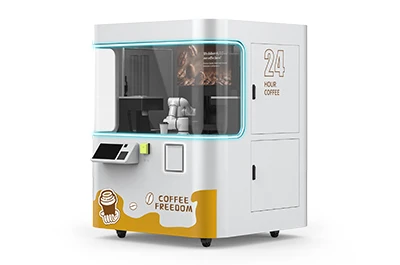
The global coffee industry is entering a new phase driven by automation, personalization, and AI-enabled customer engagement. Among the fastest-growing segments is the latte art printer and coffee printing robot market, where cafés, hotels, and smart retail operators are using edible printing technology to create branded coffee experiences.
As an emerging innovator in intelligent manufacturing and robotics, IIMT is positioning its coffee printing robot solutions as a next-generation platform for smart cafés, automated beverage kiosks, and experiential retail.
Why Coffee Printing Robots Are Growing Fast
The coffee-latte art robot market is experiencing rapid expansion globally, especially in Asia-Pacific. According to recent market research, Asia-Pacific accounted for approximately 38% of the global coffee-latte art robot market in 2024, with projected CAGR growth above 26% through 2033.
Several trends are accelerating adoption:
- Demand for personalized customer experiences
- Growth of unmanned retail and robotic cafés
- Rising labor costs in foodservice
- Social media-driven “Instagrammable” beverages
- Integration of AI, IoT, and cloud-based ordering systems
Modern coffee printing robots can now print:
- Logos
- Portraits
- QR codes
- Seasonal campaigns
- AI-generated artwork
- Brand messages
directly onto milk foam using edible ink technology.
What Makes the IIMT Coffee Printing Robot Different
Unlike traditional standalone latte printers, the IIMT coffee printing robot is designed around intelligent automation and scalable commercial deployment.
Key Capabilities
1. High-Speed Edible Printing
The robot can rapidly print customized graphics on coffee foam surfaces with high resolution, supporting:
- Cappuccino
- Latte
- Milk tea
- Hot chocolate
2. AI + IoT Integration
The new generation of coffee robots increasingly integrates:
- Cloud content management
- Remote maintenance
- Mobile app uploads
- QR ordering systems
- CRM marketing integration
These trends are becoming industry standards across the global latte-art robot market.
3. Commercial Automation
IIMT’s positioning aligns strongly with:
- Smart cafés
- Airport retail
- Hotel beverage automation
- Event marketing
- Exhibition spaces
- Robotic vending solutions
4. Brand Marketing Value
Coffee printing robots are no longer just beverage equipment — they are customer acquisition tools.
Many café operators report higher social media engagement when using printed coffee experiences, especially among Gen Z consumers.
Reddit café owners also describe coffee foam printers as strong “WOW-effect” marketing tools for younger consumers and experiential retail.
Global Market Data
Latte-Art Printer Market Size
According to Growth Market Reports:
| Market Indicator | Value |
| North America 2024 Market | USD 41.5 Million |
| Europe 2024 Market | USD 32.2 Million |
| Asia-Pacific Share | ~38% Global Market |
| APAC Forecast CAGR | 26.1%+ |
Major Growth Drivers
1. Smart Retail Expansion
Unmanned cafés and robotic beverage kiosks are expanding rapidly across:
- China
- Japan
- South Korea
- Singapore
- UAE
2. Labor Cost Reduction
Automated beverage systems help reduce:
- Barista training costs
- Labor shortages
- Operational inconsistency
3. Personalized Consumer Experiences
Consumers increasingly prefer:
- Custom messages
- AI-generated latte art
- Event-themed drinks
- Social media shareability
Competitor Analysis: IIMT vs Global Players
The coffee printing robot market includes several major international competitors.
| Company | Core Strength | Weakness | Market Focus |
| Ripple Maker (Ripples) | Pioneer brand, cloud design ecosystem | High pricing | Premium cafés |
| Artly Coffee | Fully robotic café systems | Complex deployment | Automated coffee shops |
| WMF Group | Industrial coffee equipment | Less customization | Enterprise hospitality |
| Coffee Ripples | Easy-to-use latte printers | Limited automation | Small cafés |
| Shenzhen Hi-Dolphin | Cost-effective Chinese robotics | Lower brand recognition | Asia market |
| IIMT | Intelligent manufacturing + robotics integration | Emerging international visibility | Smart retail & AI beverage automation |
Sources identify Ripple Maker, Artly Coffee, WMF Group, Coffee Ripples, and Shenzhen robotics firms as key global competitors in this sector.
Competitive Advantages of IIMT
Strong Manufacturing Ecosystem
As part of Jiangsu’s advanced manufacturing and robotics ecosystem, IIMT benefits from:
- Industrial automation expertise
- AI integration capability
- Smart equipment R&D
- Supply chain efficiency
Better Cost-to-Performance Ratio
Compared with many Western brands, Chinese intelligent robotics companies often provide:
- Lower deployment cost
- Faster customization
- Flexible OEM/ODM capability
Scalable Smart Retail Potential
IIMT is well-positioned for:
- Smart café chains
- Automated kiosks
- AI retail spaces
- Future robotic beverage ecosystems
Use Cases for Coffee Printing Robots
Café Chains
Create:
- Seasonal latte campaigns
- Brand logos
- Customer names
- Limited-edition drink art
Hotels & Luxury Hospitality
Enhance premium guest experiences with:
- Welcome drink branding
- Event-themed beverages
- VIP personalization
Events & Exhibitions
Coffee printers are increasingly used for:
- Trade shows
- Brand activations
- Product launches
- Interactive marketing
Smart Retail & Unmanned Stores
Coffee robots integrate well with:
- Mobile ordering
- Self-service kiosks
- AI cashier systems
- Retail automation
Technology Trends Shaping the Industry
Industry reports show several important future trends:
AI-Generated Latte Art
Customers may soon generate coffee artwork using AI prompts.
Cloud-Based Content Libraries
Centralized systems allow brands to push seasonal campaigns to thousands of stores instantly.
Multi-Beverage Printing
New systems can print on:
- Matcha
- Cocktails
- Desserts
- Milk tea
Predictive Maintenance
AI diagnostics reduce downtime and improve operational efficiency.
These innovations are becoming major differentiators in the global coffee-latte art robot industry.
FAQ
What is a coffee printing robot?
A coffee printing robot is an automated system that prints edible images, logos, or messages onto coffee foam using food-safe ink technology.
How does a latte art printer work?
The machine uses edible inkjet printing technology combined with image-processing software to print customized designs directly on foam surfaces.
What industries use coffee printing robots?
Common industries include:
- Cafés
- Hotels
- Restaurants
- Event marketing
- Smart retail
- Automated vending
Why are coffee printing robots becoming popular?
The biggest reasons are:
- Social media marketing
- Personalized customer experiences
- Labor automation
- Smart retail transformation
Who are the major competitors in the coffee printing robot market?
Major global players include:
- Ripple Maker
- Artly Coffee
- WMF Group
- Coffee Ripples
- Shenzhen robotics manufacturers
What advantages does IIMT offer?
IIMT combines:
- Intelligent manufacturing
- Robotics integration
- AI capabilities
- Smart retail deployment
- Competitive production costs
Is the coffee printing robot market growing?
Yes. Multiple market reports project strong double-digit growth through 2033, especially in Asia-Pacific markets.
Can coffee printing robots support branding campaigns?
Absolutely. Many cafés and event operators use them for:
- Brand logos
- QR code campaigns
- Event promotions
- Personalized customer engagement
Conclusion
The coffee industry is shifting toward intelligent automation, immersive consumer experiences, and AI-enabled personalization. Coffee printing robots are rapidly evolving from novelty devices into strategic retail technology platforms.
With strong roots in intelligent manufacturing and robotics, IIMT has the opportunity to become a major player in the next generation of smart beverage automation.
As global cafés increasingly adopt robotic systems, cloud-connected devices, and AI-powered customization, companies that combine manufacturing capability, automation expertise, and scalable deployment models will lead the future of intelligent coffee retail.