
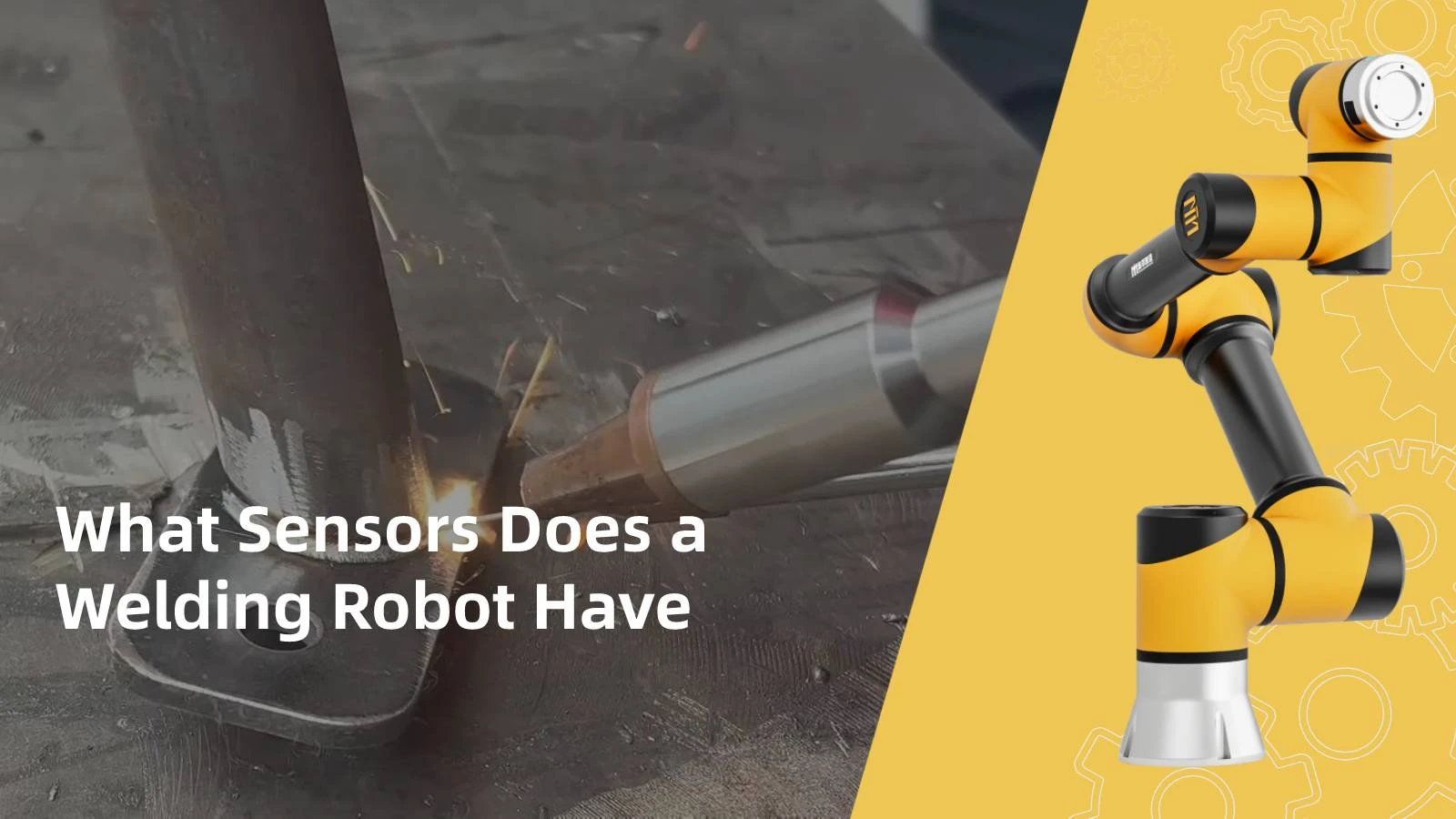
Description
In the realm of industrial automation, welding robots have emerged as indispensable tools for enhancing precision, efficiency, and safety in welding processes. These robots are equipped with an array of sensors that enable them to perform tasks with remarkable accuracy and consistency. Let's explore some of the essential sensors utilized in welding robots:
5 Key points of welding sensor
No.1.
Optical Sensors
Optical sensors are commonly employed in welding robots for tasks such as seam tracking and weld inspection. These sensors use cameras or laser-based systems to detect features such as weld joints, ensuring precise positioning of the welding torch relative to the workpiece. By continuously monitoring the welding process, optical sensors help maintain consistent quality and reduce errors.
No.2.
Proximity Sensors
Proximity sensors play a vital role in ensuring the safety and efficiency of welding robots. These sensors detect the presence of nearby objects or obstacles, allowing the robot to navigate its environment safely. In welding applications, proximity sensors are often used to prevent collisions with workpieces, fixtures, or other equipment in the workspace.
No.3.
Force/Torque Sensors
Force and torque sensors provide real time feedback on the forces exerted by the welding torch on the workpiece. By measuring parameters such as welding force and contact pressure, these sensors enable precise control of welding parameters such as speed, penetration depth, and bead geometry. This results in high quality welds with consistent mechanical properties.
No.4.
Temperature Sensors
Temperature sensors are critical for monitoring and controlling the heat generated during the welding process. In robotic welding applications, thermocouples or infrared sensors are often used to measure the temperature of the weld zone and surrounding areas. This data allows the robot to adjust welding parameters in real-time to optimize weld quality and prevent issues such as overheating or distortion.
No.5.
Touch Sensors
Touch sensors, also known as tactile sensors, are utilized for tasks requiring precise positioning or manipulation of objects. In welding robots, touch sensors can be integrated into the end effector to detect contact with the workpiece or welding fixture. This enables the robot to accurately locate reference points or perform tasks such as seam tracking and part alignment with high precision.
In conclusion, the integration of advanced sensors into welding robots has revolutionized the welding industry by enhancing precision, efficiency, and safety. By leveraging technologies such as optical sensors, proximity sensors, force torque sensors, temperature sensors, and touch sensors, welding robots are capable of delivering consistent, high-quality welds across a wide range of applications. As automation continues to advance, these sensors will play an increasingly crucial role in shaping the future of welding technology.