
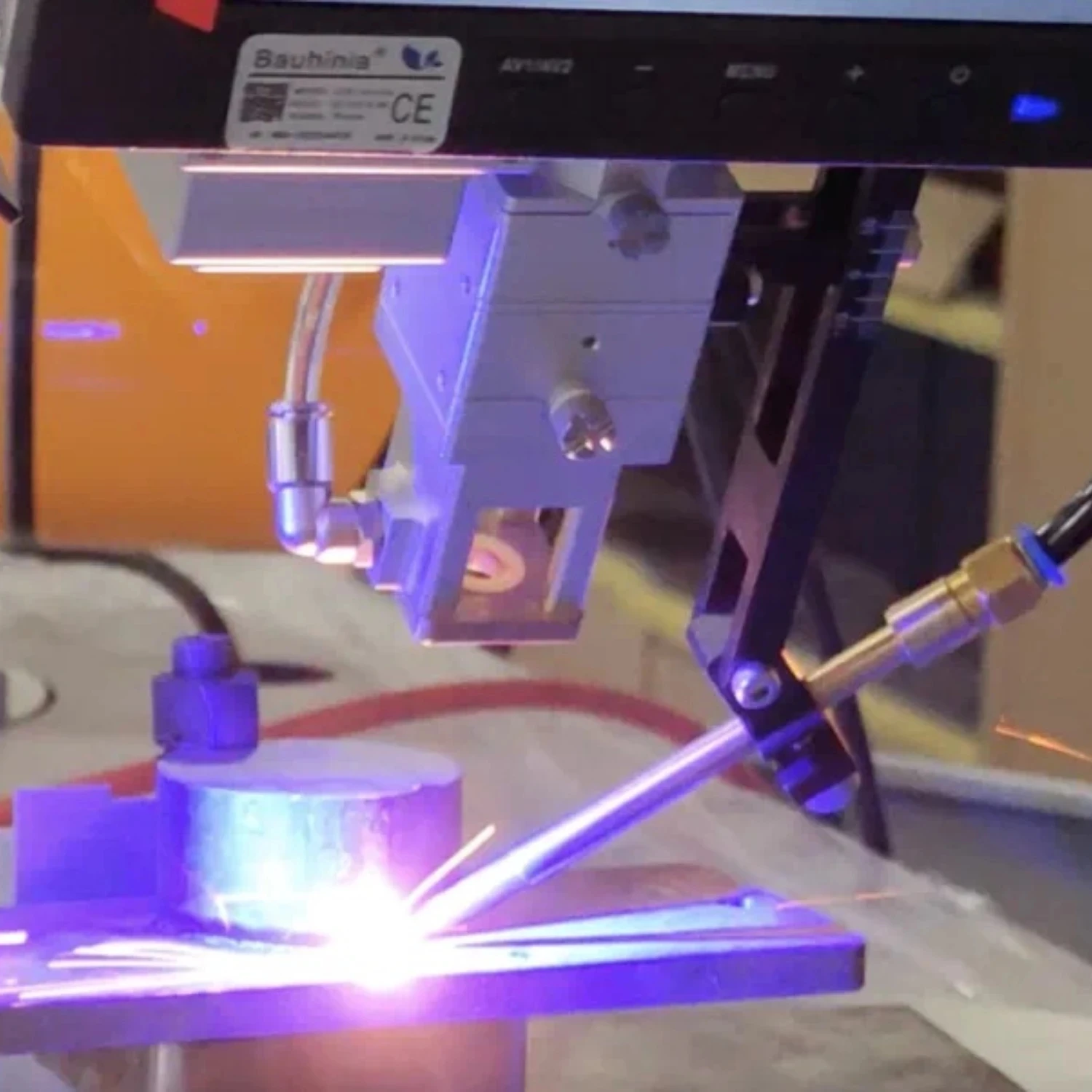
Enhancing Laser Welding Effectiveness
As a professional with 20 years of experience in laser
welding, I'm well aware of the disparities between
traditional manual welding and modern robotic welding.
In this article, I'll delve into how robotic welding can
improve the effectiveness of laser welding and elucidate
its transformative impact on the current landscape of
manual welding.
Manual Welding vs Robotic Welding
Manual Welding
Relies on the skill and experience of the worker, subject to factors like fatigue, focus, and technical proficiency.
Exhibits higher inconsistency in quality, susceptible to environmental factors and operational errors.
Low production efficiency due to significant manual labor input, resulting in longer cycles and high costs.
Robotic Welding
Employs precise control systems and advanced sensor technologies to execute welding operations with high accuracy.
Offers stable and reliable welding quality, virtually eliminating the possibility of human errors.
Drives significant productivity gains as robots can work quickly and continuously, reducing production cycles and costs.
Benefits of Robotic Welding
01.
Precision & Consistency
Robotic welding achieves welding operations with millimeter-level precision and maintains consistent quality, unaffected by human factors.
02.
Production Efficiency
Through automated welding processes, robots can complete tasks rapidly and continuously, significantly improving production efficiency and shortening delivery cycles.
03.
Safety
Robotic welding reduces safety risks associated with manual welding, decreasing the likelihood of workers being exposed to potential hazards and creating a safer working environment.
04.
Cost-effectiveness
While the initial investment for robotic systems may be high, considering their long-term stable performance and productivity enhancements, they can deliver a high return on investment.
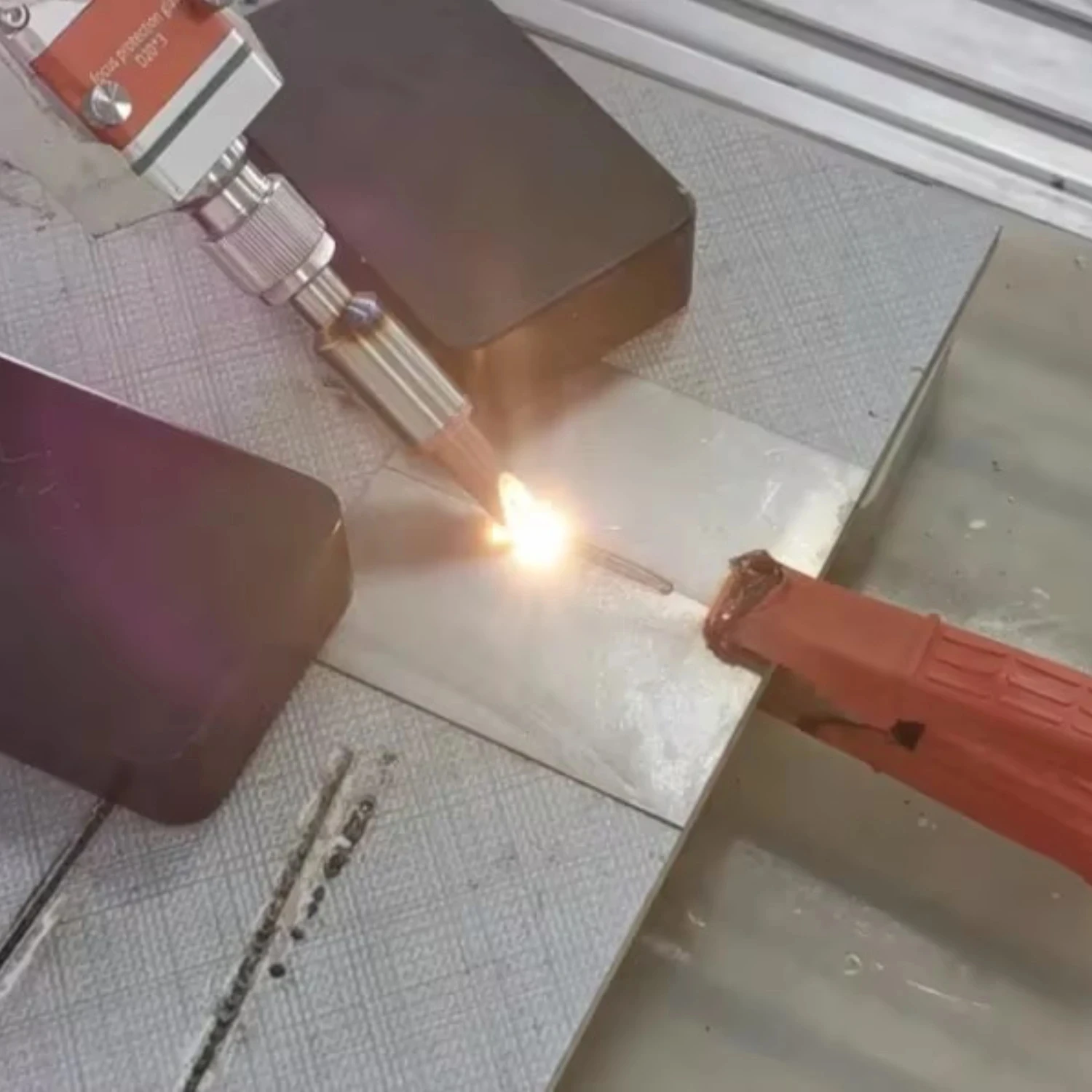
Impact on the Current Landscape of Manual Welding
The advent of robotic welding has fundamentally altered the landscape of manual welding. With ongoing advancements in robotic technology and decreasing costs, more businesses are adopting robots to replace traditional manual welding methods. This not only enhances production efficiency and product quality but also reduces labor costs and production risks for enterprises. Furthermore, workers can be liberated from arduous, repetitive tasks, allowing them to engage in higher level, creative work, thereby enhancing overall production line intelligence and sustainability.
In the realm of laser welding, the emergence and application of robots undoubtedly propel this technology towards new heights. Through precise control and automation by robots, laser welding becomes more efficient and accurate, paving the way for broader applications across various industries.
As pioneers in the industry, it's imperative that we embrace robotic technology actively and continuously explore its innovative applications in laser welding to maximize production efficiency and ensure sustained quality improvement.