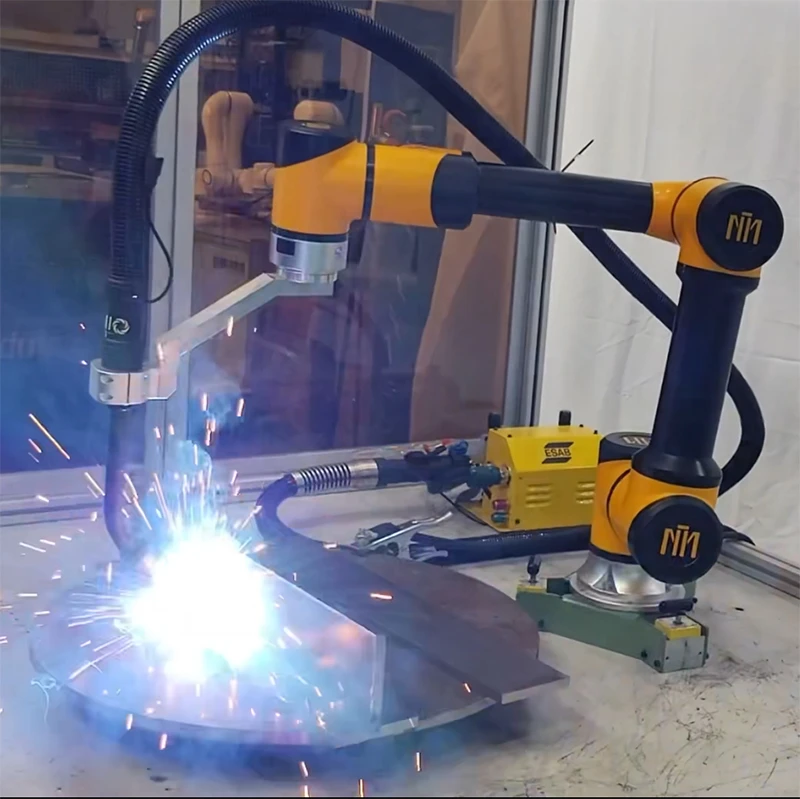
Robotic welding is a rapidly growing industry with revolutionary technologies that are transforming manufacturing. This new technology has brought significant improvement in speed and accuracy, and has effectively redefined workplace safety standards. Today, robots are commonly used in many industries to weld automotive components, lawn mowers, tractors, and other electrical equipment.
As businesses look for innovative ways to optimize their operations, the use of robotic welding has become increasingly popular. The benefits of using robotic welding equipment are manifold. Besides increasing the accuracy of each weld, robots save time which leads to more productivity in a shorter time. Additionally, robots implement higher level of safety standards for the manufacturing industry. By eliminating the need for human intervention, the likelihood of accidents is significantly reduced.
The use of robotics in manufacturing has also led to significant cost savings for companies. Robots are cheaper to operate when compared to manual labor, thus reducing the long-term operating costs of businesses. This has made use of robotics an increasingly attractive option for companies looking to improve their bottom lines.
As the technological landscape evolves, innovation has led to increased robot customization and interoperability. These advancements in automation technology have led to the development of robots with the ability to work in smaller and more customized spaces. This has resulted in more flexible manufacturing solutions that can be catered to unique industrial needs. Additionally, interoperability, which is the ability of robots to communicate with and operate alongside other robots, has opened up new possibilities for industry collaboration.
Robotic welding solutions providers are taking advantage of these advancements to develop products with enhanced capabilities, including specialized welding solutions that are tailored to specific industrial applications. As companies become more conscious of environmental impact, they are increasingly opting for sustainable solutions, and robotic welding manufactures are responding by creating environmentally friendly solutions that are energy efficient.
The robotic revolution continues to disrupt conventional manufacturing processes, with the growth of versatile and efficient machinery which are now essential to the manufacturing process. With the incredible pace of technological advancement, experts predict that the robotic welding industry will continue to show growth in the coming years as more businesses adopt this game-changing technology. The future growth of the industry will be driven by AI, automation, and enhanced interoperability which will make it even easier to control and manage the production process. To stay competitive, manufacturers must embrace these new technologies and keep up with the latest trends.
In conclusion, the impact of Robot MIG welding technology cannot be underestimated. It has revolutionized the manufacturing sector and will continue to do so for years to come. the IIMT welding robot is a game-changer for the welding industry, offering a reliable, efficient, and cost-effective solution that can improve productivity and precision. As the demand for portable welding solutions continues to grow, companies that invest in this cutting-edge technology will be well-positioned to take advantage of the many benefits it offers. For more information on the IIMT welding robot, including pricing and FAQ, head to the company's website or contact their customer service team.