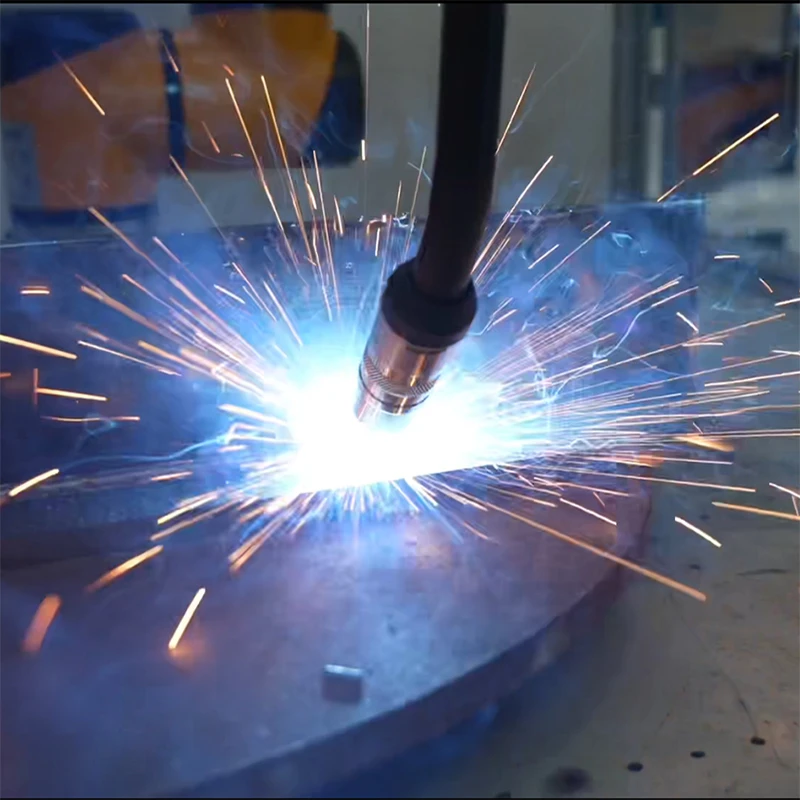
The manufacturing industry has been revolutionized by the power of welding robots, which has helped boost productivity and efficiency. Welding robots have increased precision and accuracy, cutting down on human error and significantly reducing cost.
Welding robots are quickly becoming the norm in many industries for their speed, accuracy, and flexibility, making them an attractive choice for businesses looking to optimize their production line. They are also known for their ability to work in hazardous or difficult-to-reach areas, reducing the need for humans to perform these tasks, thus ensuring the safety of employees.
The automotive industry has been at the forefront of utilizing welding robots in their production. The use of welding robots has allowed for an increase in the production of cars while maintaining high quality and reducing production costs. A significant percentage of the automotive industry's welding is now done using welding robots.
Over the years, the use of welding robots has also expanded into other manufacturing industries, such as aerospace, oil and gas, and even construction. Increasingly, companies in these industries are integrating welding robots into their production lines to boost productivity and improve the overall quality of their products.
The rise of welding robots has also led to advancements in the technology used. The welding robots are now equipped with sensors, which can detect when a weld is complete, reducing the need for human inspection. They can also be programmed to work with different materials and welding techniques, making them versatile in their applications.
However, the integration of welding robots into a production line is not without its challenges. Businesses need to invest time and money in training employees on how to properly operate and maintain the welding robots. It is also essential to ensure that the robots are integrated correctly with other machinery in the production line.
welding robots have revolutionized manufacturing by boosting the efficiency and productivity of production lines. While there are challenges involved in integrating them into a production line, the benefits of using welding robots make it a worthwhile investment for businesses looking to increase their competitiveness. Companies looking to stay ahead of the competition should explore the power of welding robots and learn how integrating them into their production line can improve their bottom line.
In conclusion, the impact of Robot MIG welding technology cannot be underestimated. It has revolutionized the manufacturing sector and will continue to do so for years to come. the IIMT welding robot is a game-changer for the welding industry, offering a reliable, efficient, and cost-effective solution that can improve productivity and precision. As the demand for portable welding solutions continues to grow, companies that invest in this cutting-edge technology will be well-positioned to take advantage of the many benefits it offers. For more information on the IIMT welding robot, including pricing and FAQ, head to the company's website or contact their customer service team.