
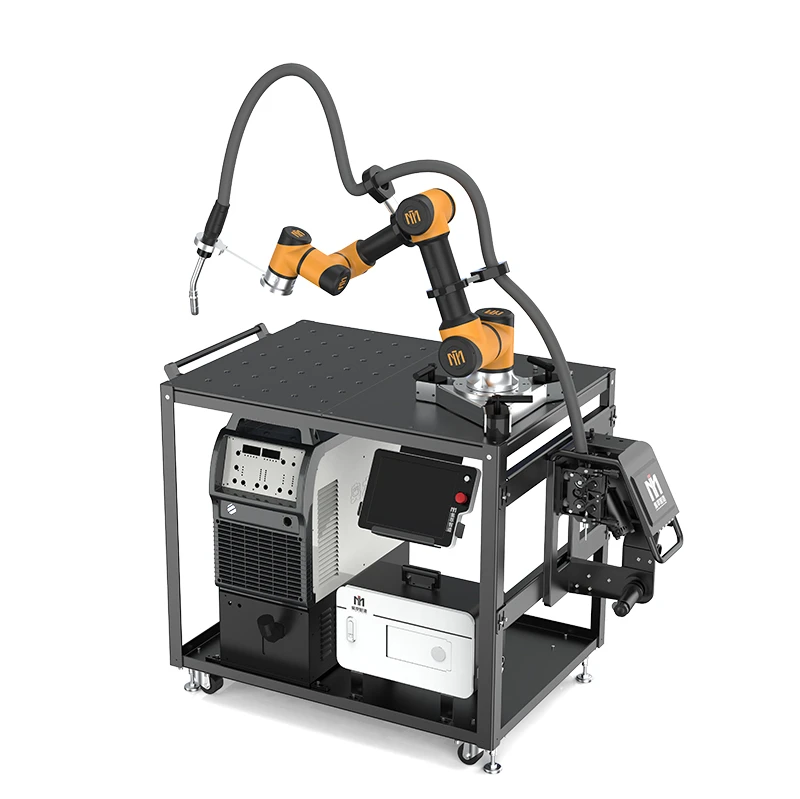
Introduction
In an era where automation is reshaping the manufacturing sector, a new frontier is emerging in the form of welding cobots—collaborative robots specifically designed to complement human workers in the welding industry. The adaptability, efficiency, and safety these machines bring to the table are redefining production lines around the globe. As industries strive to enhance productivity while ensuring high-quality outputs, welding cobots present a compelling solution. In this report, we will explore the current hotspots in the welding cobot market, the technology driving innovation, and the transformative benefits that these robots offer.
Market Overview
The global welding cobot market is experiencing remarkable growth, driven by an increasing demand for automation in various sectors including automotive, construction, and metal fabrication. Market research firms estimate that the welding cobot industry is set to grow at a compound annual growth rate (CAGR) of over 20% between 2023 and 2030. This boom is fueled by several factors, including a shortage of skilled labor, the demand for high-precision welding, and an increasing push for safer workplace environments.
Key Market Hotspots
North America
North America, particularly the United States, providing innovative solutions that cater specifically to the domestic market's needs. The rise of startup companies specializing in automated solutions for welding and the resurgence of manufacturing in the U.S. are contributing to significant investments in cobot technology.
Europe
Europe is another hotspot for welding cobot advancements. Nations such as Germany and Denmark are known for their robust manufacturing sectors and progressive automation policies. The European Union has recognized the potential of automation and is investing heavily in robotics. Companies like KUKA and Yaskawa Electric have developed welding cobots that prioritize both efficiency and operator collaboration, further driving the adoption across industries.
Asia-Pacific
The Asia-Pacific region, with its booming manufacturing landscape, particularly in countries like China, Japan, and South Korea, is witnessing rapid growth in the utilization of welding cobots. The region is characterized by high demand for bespoke products and quick delivery times, which welding cobots can facilitate. Chinese companies are increasingly turning to collaborative robots to maintain competitiveness in the global market, driving advancements in local technologies.
Latin America and the Middle East
While still emerging, countries in Latin America and the Middle East are slowly venturing into the adoption of welding cobots. Economic diversification efforts, particularly in nations like Brazil and the UAE, are paving the way for investment in automated solutions. The future looks promising as industries in these regions recognize the importance of modernizing their manufacturing processes.
The Technology Behind Welding Cobots
Welding cobots are equipped with advanced sensors, machine learning algorithms, and artificial intelligence that enable them to work safely alongside their human counterparts. Unlike traditional industrial robots that are often encased in safety barriers, cobots are designed with safety in mind, incorporating features such as force-limiting technology that helps to prevent accidents.
The integration of vision systems allows these machines to perform complex welding tasks with high precision. With capabilities such as automatic position adjustment and real-time quality control, welding cobots minimize human error, leading to consistent, high-quality welds. Training these machines requires minimal downtime, allowing for quick turnaround in production lines.
Benefits of Welding Cobots
Enhanced Efficiency
One of the standout advantages of welding cobots is their efficiency. By taking over tedious and repetitive tasks, these machines allow human operators to focus on more complex and value-added activities. For instance, when paired with a skilled welder, a cobot can handle the more straightforward parts of the welding process, while the human operator can manage the overall coordination and the more detail-intensive aspects of the project.
Safety Improvements
Safety is a paramount concern in welding operations, and welding cobots significantly mitigate risk. With their ability to sense the presence of human operators and adjust their movements accordingly, they help reduce the likelihood of accidents. This aspect is particularly vital in industries with high injury rates due to the nature of welding tasks. As noted by the Occupational Safety and Health Administration (OSHA), reducing workplace accidents leads not just to safer employees, but also to lower costs related to health care and increased productivity.
Precision and Quality Control
With robots, one of the primary benefits is their ability to maintain precision through repetitive tasks. Welding cobots utilize advanced technology to provide uniform welds every time, which is essential for industries where quality control is critical, such as automotive manufacturing. The use of AI and machine learning enables adaptive quality control, where cobots can learn from each weld and refine their techniques based on data accumulated over time.
Scalability
Welding cobots are exceptionally scalable solutions. They can be easily integrated into existing production lines without the need for extensive infrastructure modifications. Moreover, businesses can add more cobots as their needs grow without drastically changing their operational workflows, providing an avenue for gradual investment in automation technologies.
Challenges and Considerations
While the benefits of welding cobots are compelling, several challenges need to be addressed to facilitate broader adoption:
Initial Investment Costs: The upfront costs associated with cobot implementation can be high, particularly for small and medium-sized enterprises (SMEs). However, the long-term return on investment (ROI) generally justifies the capital outlay.
Skill Gap: The current workforce may require retraining to effectively collaborate with cobots. It’s essential for companies to invest in training programs to ensure that employees can maximize the potential of collaborative robots.
Integration with Existing Technologies: Many businesses operate with legacy systems that may require significant updates or adjustments to work in harmony with new cobot technologies.
Conclusion
In conclusion, the impact of Robot MIG welding technology cannot be underestimated. It has revolutionized the manufacturing sector and will continue to do so for years to come. the IIMT welding robot is a game-changer for the welding industry, offering a reliable, efficient, and cost-effective solution that can improve productivity and precision. As the demand for portable welding solutions continues to grow, companies that invest in this cutting-edge technology will be well-positioned to take advantage of the many benefits it offers. For more information on the IIMT welding robot, including pricing and FAQ, head to the company's website or contact their customer service team.